Ben Dhiman just ran the fastest UTMB in history, 18 hours and 16 minutes. First person ever around Mont Blanc in under 19 hours, and over 1 hour and 30 mins off his own time from last year.
He did this fuelling mostly on real and normal food.
What he did goes against absolutely every marketing statement we've heard from the vast majority of athletes and nutritional brands who sponsor them in trail and ultra running, where 120g+ of carbs per hour is their aim.
Nutritional brands push fuelling as though we should all be aiming for the ceiling of what our bodies can take in, wrapped in single-use plastic that goes straight to landfill.
The reality is that normal and real foods have worked perfectly fine in endurance, and most of what they're selling is food you can buy in bulk for a fraction of the price and without the waste.
Peanut Butter and Jelly Sandwiches Won UTMB
Here's how Dhiman fuelled for UTMB; Coconut rice balls, peanut butter and jelly (jam here in the UK) sandwiches, cold soaked oats and pasta, with all this real food doing the work throughout the race.
He laughed in a recent podcast that he was probably the only person running around UMTB fuelling on peanut butter and jelly sandwiches.
He took gels as addons at the beginning of each major climb, this is a pretty unique fuelling strategy that we rarely if ever hear at the top of the sport.
The same goes for Kilian Jornet too, he is prioritising real food, like rice balls and oatmeal and even some fats when he is racing.
I was eating coconut rice balls, peanut butter and jelly sandwiches, soup and rice, cold soaked oats with coffee and then was using the gels as addons and before climbs.
Need to use the high-energy fuelling, at least in my case, at important moments but not rely solely on that.
You can listen to Ben talking about this approach here https://youtu.be/UcYnR2fvVnw?t=2102
Compare this approach to what the brands are pushing, 2 to 3 gels per hour, 120g of carbs as the benchmark and there are even some athletes stating that 150g of carbs is the new benchmark.
At 18 hours, that would be 36-50 single-use gels.
Nothing says we respect nature and the environments we move through more than consuming 5 single-use energy gels an hour that inevitably end up in landfill.
Ben Dhiman won the biggest race in trail and ultra fuelling from foods that you can buy from pretty much any supermarket for a fraction of the price.
Yes, he's sponsored by a nutritional brand, 226ers, but even when fuelling with their gels sporadically, real food still did most of the work to get him around Mont Blanc, and his average carb intake would have still landed well under what the industry says you need of 120g of carbs per hour.
Just take a look at UK ultra-marathon podiums even in the last couple of years as 120g of carbs per hour has been a prominent message. The winners are rarely over 80g of carbs per hour, some barely past 60.
The biggest point here that i'd like to make is that fuelling like this is not new, especially in the UK fell running scene. UK fell and mountain running has run on jam sandwiches, sweets, and hot soup for decades and some records still stand years later.
And this was the basis for me creating the Sustainable Fuel Guide, which has over 30+ fuel suggestions of real foods that you can buy in bulk or make at home yourself.
Sustainable Alternatives to Expensive Gels
Dhiman didn't ditch gels entirely, but looked to flip how one should fuel for ultras, he took a gel as an "addon" before every big climb.
If energy gels and chews work for you when you're racing, you actually don't have to pay big brand prices for them, you can still fuel with the same gels and chews that are sold by expensive nutritional brands but pay a fraction of the price and this is how I do it.
The next step beyond fuelling with real food here is to recreate these gels, its surprisingly easy and if we look at the gels that 226ers produce, they have 50g of carbs and their main ingredients are maltodextrin, glucose syrup, flavouring and thickener, thats pretty much it and they cost £2.90 here in the UK to buy one single.
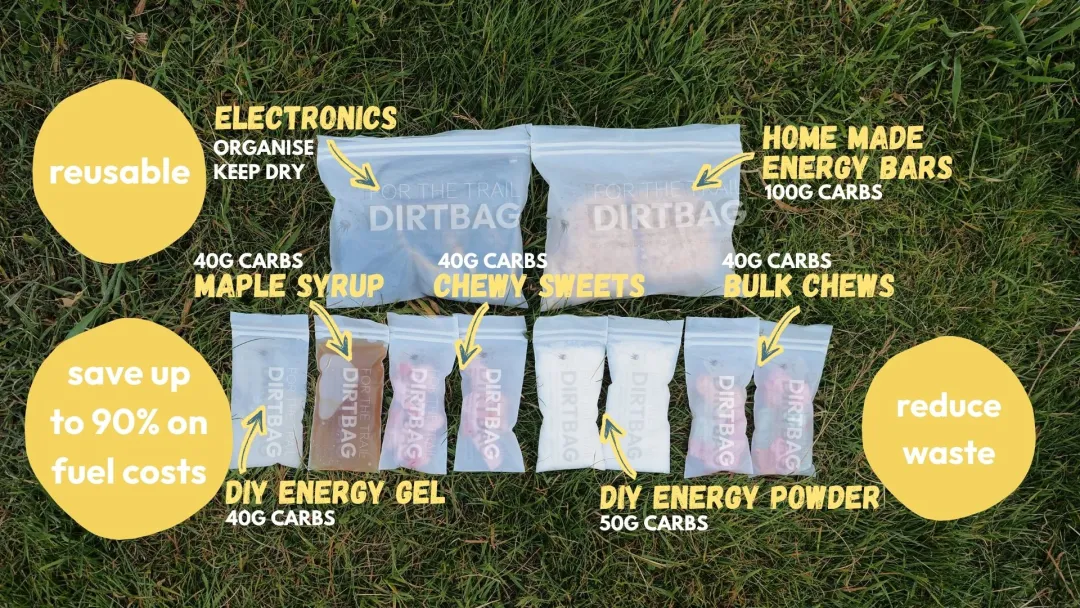
The Sustainable Fuel Guide has a few energy gel, chew and powder recipes in it as well as other snacks, but you can quite easily recreate this gel and any other for a fraction of the price and make it for as little as £0.40 and with similar ingredients. By decanting it in to a Small DirtBag too, you can also make it thicker or thinner, have different flavourings, add or remove sodium and caffeine, amongst other things, you have the option to make it better and it will cost you a fraction of the price and create zero single-use waste at the same time.
You can also go one step further and i'll go through that below.
I look at the three main fuel types; gels, chews and powders and two of the three examples below are sold by nutritional brands but you can get them in bulk instead without the waste and premium price.
- Energy gels: If you prefer energy gels, then take a look at maple syrup, there are many nutritional brands selling them for as much as £2.50 a gel and £7.50 per hour (120g carbs). However, you can buy the exact same maple syrup in bulk that costs about £2.60 per hour for the same 120g of carbs, exact same fuel, almost three times cheaper.
- Energy chews: If you prefer energy chews, which I do, branded chews can be as much as £8/hour, which come in single-use plastic packaging. Whilst bulk bought energy chews, in the form of Turkish Delight can be as little as £1.20 per hour and you get far more flavours to choose from and no single-use waste. Thats a £6.80 price difference per hour of running, that is mad.
- Energy powder: Take a look at plain sugar, its as little as £0.24 per hour for 120g of carbs, compared to £5.00 and much more for branded energy powder packets at 120g of carbs per hour.
All three of these examples are 1:1 glucose and fructose so you can fuel as much as 120g of carbs per hour if you really wanted to try. This is here as an example to show that even if you wanted to follow the high-carb fuelling that you can do it for a fraction of the price and without the single-use waste either.
The only thing that bulk buying doesn't give you is the single-serve portioning.
Thats what DirtBags are for, the worlds first, reusable single-serve energy gel, chew and powder packets. So you can fill them at home or pre-race with maple syrup you've bought in bulk or decant from your 2kg bag of Turkish Delight and even spoon in sugar or a cheap energy powder you bought in bulk to get precise carb amounts in a reusable packet.
You get the same convenience and same products that nutritional brands are selling as single-serve gels, chews and powder packets when your running, but at a fraction of the cost and without the waste going to landfill.
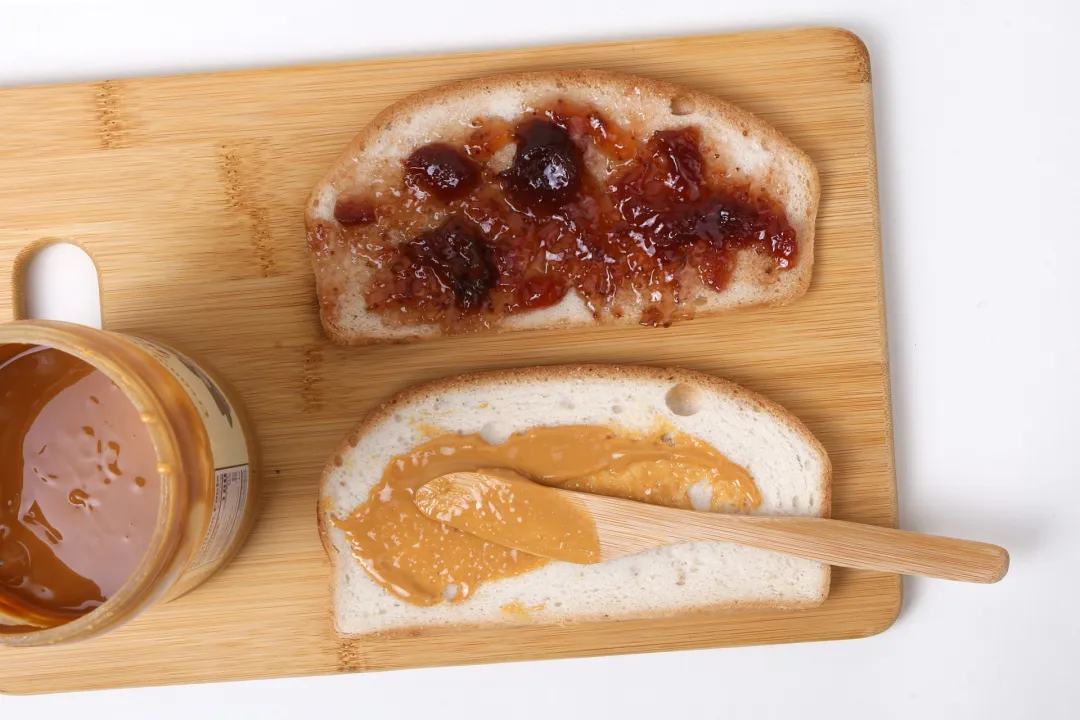
Take it a step further with something Dhiman was already eating. One of his real-food staples was a peanut butter and jelly (jam here in the UK) sandwich. Remove everything other than the jam, decant it into a small DirtBags packet, and you've got the cheapest energy gel there is and we've wrote about it in detail, its pricing, how it works and what its made of and how it can work for you in our Sustainable Fuel Guide, along with 30+ other fuelling suggestions.
Jam has around 64g of carbs per 100g, so a 30g-carb portion costs roughly £0.09. Cheaper than the maple syrup example, and you might have it already sitting in your cupboard at home.
To sign off on this article, nutritional brands own the narrative of trail running and that narrative is consume consume consume, and its pretty disgusting. They are actively marketing higher and higher amounts of carbohydrates to consume per hour, all whilst repackaging fuels you can buy elsewhere for a fraction of the price and take no responsibility for the waste they create.
Trail running shouldn't cost the earth and the industry doesn't seem to care that it does.