
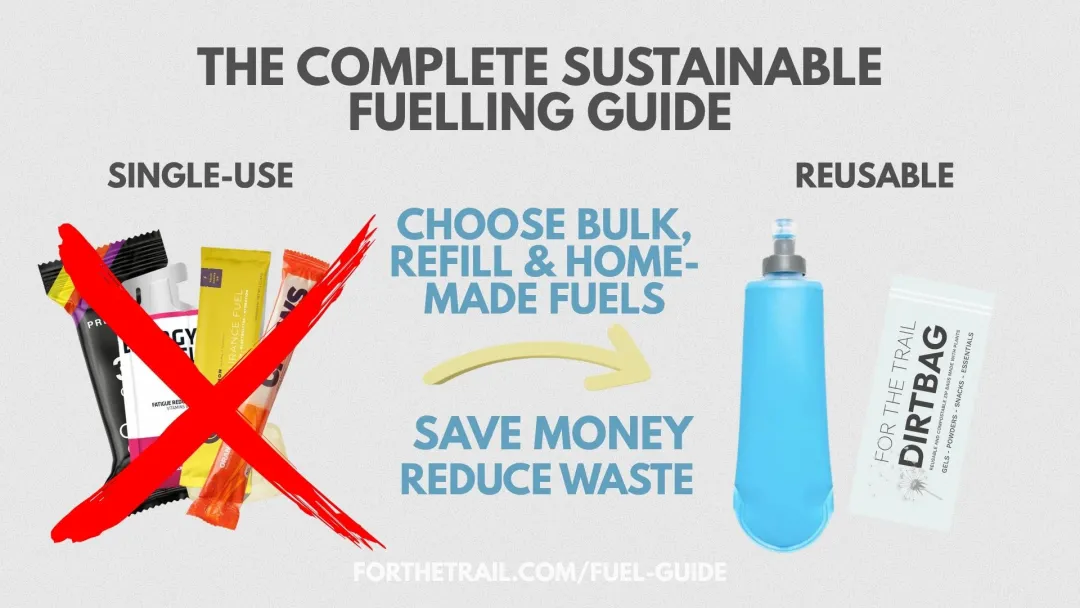
Welcome to Project #1: DirtBags and the other half of the project, this guide to financially and environmentally sustainable fuelling in endurance, trail running and ultra-marathons.
Trail running was born in the natural world, built on a love for wild places and the communities that protect them. But somewhere along the way, the industry forgot that foundation and connection to nature. This continues on with endurance fueling, which has become dominated by brands wrapping sugar, literally pennies worth, in single-use plastic and charging premium prices while generating mountains of waste that end up in landfill.
Here's what they won't tell you: the fuel the pros use isn't special. It's sugar, maltodextrin (glucose), fructose, brown rice syrup, rice, potatoes, fruit and home-made snacks. All ingredients you can buy in bulk for a fraction of the price, without the single-use packaging waste.
Same carbs, same performance, radically different price tag and a much smaller environmental impact.
This guide is about celebrating who are trying to ask less of the planet and is part of Project #1: DirtBags, by For The Trail. There are brands doing it right, offering bulk options, refillable pouches, and real food alternatives that respect both your wallet and the planet. Combine that with home-made real food suggestions, recipes and snacks that you can buy in bulk that do the same thing, this is what the sustainable fuel guide for endurance is all about.
What you'll find in this guide:
- An open letter to get nutritional brands to offer bulk and refill options of they're current fuels
- How to fuel like a pro with financial savigns of 60-90%
- Bulk refill options from nutritional brands who actually care
- DIY recipes to recreate premium gels, chews and powders at home
- Real whole food recipes that perform just as well
- The real cost comparison: showing the savings of going bulk or making yourself compared to buying single-serve options
To keep this guide free and independent, some of the links to products are affiliate links. If you buy anything through them, it helps support ForTheTrail.com and allows me to keep building these resources for the trail running community. You can also support us directly at forthetrail.com/support
I would like to prefix this guide with, I'm not a nutritionist or coach, I'm a fell walker, mountain and ultra runner who's been fueling endurance pursuits my entire life, fell in to the single-use convenience trap and got tired of paying extra while watching gel packets pile up in landfill.
This guide is continuously updated as more brands offer sustainable bulk options and as we test new DIY recipes.
Version: 1.3If you didn't know, For The Trail is continually working on ways (projects) that makes trail running more affordable for everyone and with a focus on protecting the very thing that makes our hobby so beautiful, the natural world. You can see the For The Trail roadmap here of the current projects we're focusing on, like this one and those that we have planned in for the future.
Welcome to the financial and environmental sustainable guide to fuelling for adventures, let's get in to it.
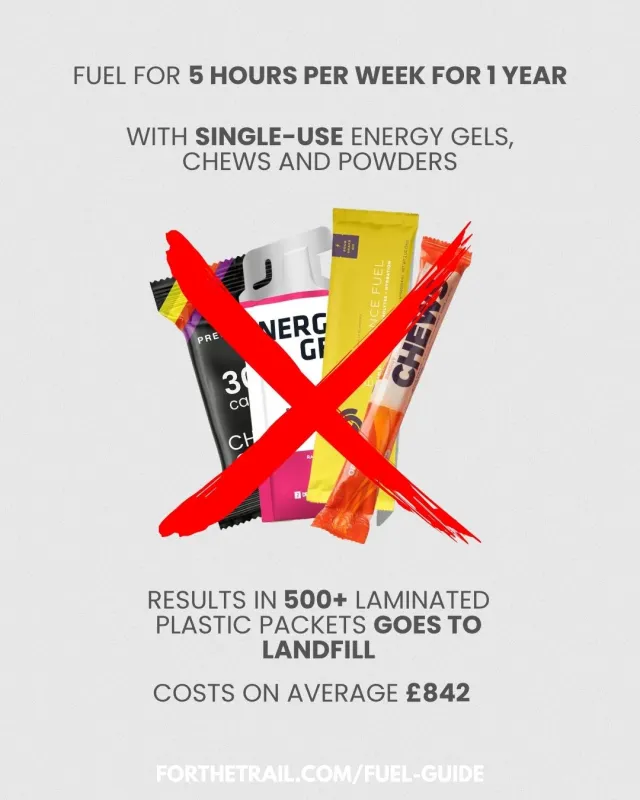
Open Letter to Nutritional Brands to Supply Bulk and Refill Fuels
To all nutritional brands who sell single-use and single serving fuel options, your single-use packaging is not helping the planet or the natural world of which our sport and hobby is based on.
Stop pretending single-serve packets are the only option, we ask you to offer bulk refill pouches and tubs as standard, not as an afterthought, not as a "limited edition," but as the default.
And make the packaging actually recyclable.
The technology exists, brands like High5, Open Fuel, and FTP Endurance have already proven it works. Runners are ready, we're literally making our own fuel at home because you won't give us a better option and the demand is there.
Here we celebrate all those trying to do better and we want to celebrate you too.
Pro-Level Fueling Doesn't Require a Pro-Level Budget
This guide shows you how to fuel like a professional, with energy gels, powders, chews, and real food, for a fraction of the cost and far less waste.
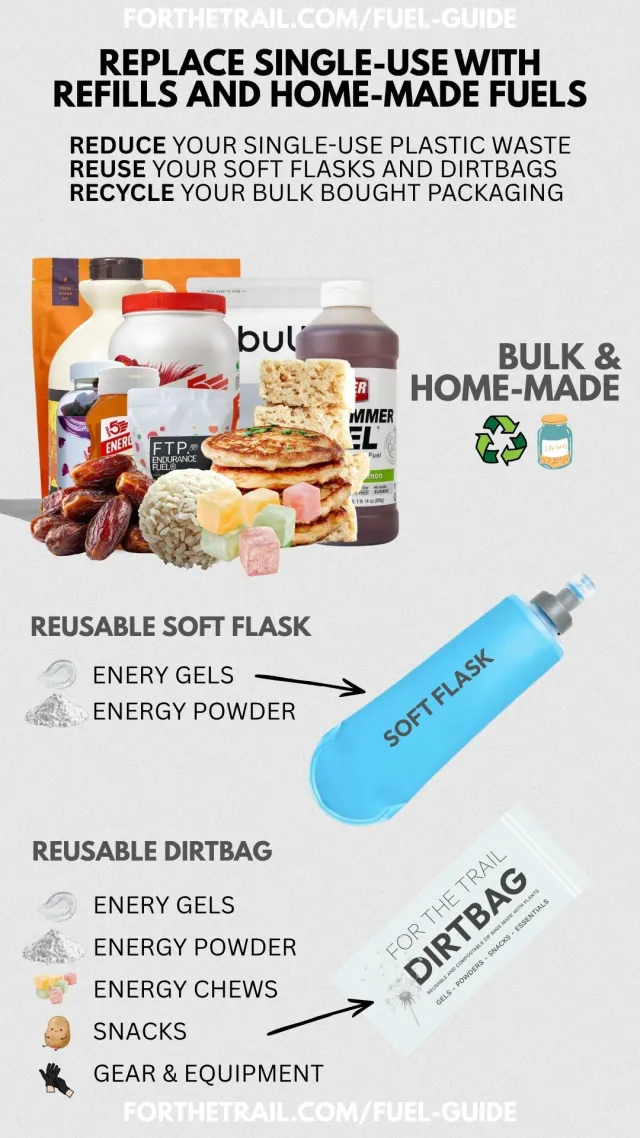
Examples of What We Cover Below
Every example we share is comparing the RRP price of a single-serve option a nutritional brand sells, compared to its bulk offerings.
We are basing each scenario on fuelling at 60g of carbs per hour and fuelling for 5 hours per week, whether in training or a race to show you the savings per year using this common fuelling scenario and annual spend on nutrition products.
FTP Endurance Energy Pastilles (Chews) will cost you £2.62 per hour using their bulk pack compared to £6.60 per hour with their single serving options. This will save you £3.98 per hour and can save you upwards of £1,035 a year all whilst reducing your single-use plastic waste.
High5 Energy Gummies (Chews) will cost you £1.74 per hour compared to £4.79 if you fuelled with their single sachet offerings. Save £3.05 per hour, which is £794 per year and put 500 fewer plastic packets in the landfill.
Or if you want to make your own energy chews at home, you can save even more:
Comparing home made energy chews with an expensive option like the Precision Hydration PF30 Energy Chews it costs just £0.60 per hour for a home-made energy chew with maltodextrin compared to £4.50 per hour for a single PF30 energy chew by Precision Hydration. This can save you £1,014 per year and you will reduce your plastic packet demand by 520 packets.
If you prefer energy gels, you can save £359 per year by switching from single serve gel packets at £3.38 per hour to bulk refill bottle costing £2.00 per hour for the High5 energy gels.
If you just want to skip to the intro and see how you can save money and reduce plastic waste, you can just ahead, go here.
The Fuel Options We Cover In This Guide
As we update this guide in the future, we will also update this list here to show you the options we're covering and the savings you can make. You can use this quick list below to see if the types of specific nutrition products you take are covered so that you can quickly see alternatives to them.
Do You Fuel With Single Serve Energy Chews?
- Swap FTP Endurance single packets with bulk and refill options here and save £3.98 per hour*
- Swap High 5 single packets with High5 refill bulk bottle here and save £1.74 per hour*
Do You Want To Make Your Own Energy Chews?
- Recreate expensive energy chews from nutritional brands here for as little as £0.60 per hour*
Do You Fuel With Single Serve Energy Gels?
- Swap Open Fuel single packets for bulk energy gel mix and save $2.60 per hour*
- Swap Active Root single gels for bulk energy gel mix and save £1.40 per hour*
- Swap High5 single energy gels with bulk refill bottle and save £1.38 per hour*
- Swap Hammer Nutrition single energy gels with bulk bottle and save $1.62 per hour*
- Swap Kendal Mint Co single energy gels with their bulk refill and save £0.34 per hour*
- Swap MuleBar single energy gels with their bulk bottle and save 2.78Euro per hour*
- Swap UnTapped maple syrup energy gels with bulk refill bottle and save $0.85 per hour*
Do You Want To Make Your Own Energy Gels
- Recreate expensive energy gels with maltodextrin from nutritional brands for as little as £0.40 per hour*
- Recreate expensive energy gels with brown rice syrup from nutritional brands for as little as £0.40 per hour*
- Fuel with maple syrup energy gels that are super simple to make and decant yourself for as little as £1.34 per hour*
- Fuel with table sugar for as little as £0.06 per 60g of carbs per hour*
Do You Fuel With Energy Powders
- Make your own energy powder at home that costs a fraction of the price
- Swap Tailwind Endurance single serve packet energy powder for their bulk bags and save £0.68 per hour*
- Swap High5 single energy powder packets for their bulk tubs and save as much as £0.54 per hour*
Do You Want to Fuel With Snacks
- Fuelling with Stroopwafels and caramel waffles and save as much as £7.35 per hour*
- Fuelling with soft chewy sweets and save as much as £1.20 per hour*
- Turkish delight, the original energy chew can save you over £3.80 per hour*
- Fuel with biscuits, one of my favourites is fig rolls and as cheap as £1.10 for 100g of carbs
- Fruit like bananas and dates can be as cheap as £0.20 per hour at 60g of carbs
Do You Want To Fuel With Real Food
- Sweet potato is a savoury real food option that costs as little as £0.20 per hour
- Sticky rice balls and rice pudding are other great savoury rice based real food fuel options
- Potato cakes are another great potato option that cost as little as £0.50 per hour
- Chewy rice crispy bars are a favourite, very easy to make and cost just £0.66 per hour for 60g of carbs
- Home made flapjacks with healthy fats for as little as £0.30 per hour
Fuel Scenarios Quick Links (Coming Soon)
- Training run of 1 or more hour
- Races of 3 or more hours
- Races of 6 or more horus
- Back Yard Ultra formats and fuelling scenarios
- Multiday fastpacking and backpacking fuelling scenarios
We want to show you how you can turn £4 per hour in fuelling costs, in to £0.40 per hour and at the same time, stop adding rubbish to the landfill after a single use. When you look at the cost and the waste created, it actually seems mad and it is these issues we want to cover.
We want to show you exactly what this guide will do in just one example and this is what most trail runners, ultra marathoners and endurance athletes do for fuelling, what it costs your wallet and what it costs the earth.
Here are a handful of really quick examples and scenarios that we develop on further on in the guide.
We compare the price and packaging saving of swapping out single-use packets with buying energy-powder in bulk:
If you fuel with energy powder and you buy single-serve sachets that cost £2.50/hour, you create 2 plastic packets per hour that end up in landfill, but buying the same powder in bulk from the same brand and using reusable DirtBags costs just £0.73/hour with zero waste, saving you £460/year and eliminating 500+ plastic sachets if you fuel for 5 hours per week with this method.
We compare the price and packaging saving of swapping out single-use energy gels with bulk buying energy gels:
If you fuel with energy gels and you buy single-serve packets that cost £3.34/hour, you create 2 plastic packets per hour that end up in landfill, but buying the same gel in bulk refill packs from the same brand and using reusable DirtBags or silicone soft flasks costs just £3.00/hour with zero waste, saving you £88/year and eliminating 520+ plastic gel packets if you fuel for 5 hours per week with this method.
We compare the price and waste saving on recreating nutritional brand energy gels at home:
If you fuel with energy gels and you buy single-serve packets that cost £5.64/hour, you create 2 plastic packets per hour that end up in landfill, but making your own gel at home with glucose, fructose and gelling agents (thickeners) costs just £0.40/hour with zero waste. Saving you £1,362/year and eliminating 520+ plastic gel packets if you fuel for 5 hours per week with this method. Plus you can customise the thickness, add flavours, and dial in your nutrition to your exact preferences.
We compare the price and plastic waste saved by recreating energy chews at home instead of buying from a nutritional brand:
If you fuel with energy chews and you buy single-serve packets that cost £4.50/hour, you create 2 plastic packets per hour that end up in landfill, but making your own chews at home and using reusable DirtBags costs just £0.40/hour with zero waste, saving you £1,066/year and eliminating 520+ plastic packets if you fuel for 5 hours per week with this method.
These are just four real life examples that can be replicated very easily, sometimes in just a matter of minutes, such as decanting a bulk bought energy powder in to DirtBags.
Same performance, same convenience, radically different impact on your wallet and the planet.
Fuelling at 60g of Carbs Per Hour and As Much As 120g of Carbs Per Hour
This guide is based on consuming 60g of carbs per hour through home-made or bulk bought energy gels, energy chews, energy powders, alternative bulk bought snacks and home-made fuel options. Whilst using reusable DirtBags and reusable silicone soft flasks (which you probably already own) to carry specific amounts of carbohydrates for your nutritional plan when training, racing or adventuring over long distances.
The reason this guide is set up at 60g of carbs per hour is because most people can fuel at this. We are though capable of fuelling upwards of 120g of carbs per hour by fuelling with glocuse and fructose, which are two different pathways that can work for us. I won't get in to how this works, but this seems to be our ceiling and what the latest science is saying. The important thing to remember is that the more carbs you try and take in per hour, the better you are fuelled for harder efforts. This comes with a caveat though, you'll have a higher chance of gut issues.
In some scenarios we also fuel from fats too, so it's an important thing to consider when working out what you should be consuming, especially on really long adventures and anything that may be over the span of a few hours. It's one of the reasons I recommend tossing energy chews and other snacks in desiccated coconut, amongst other suggestions.
But for the sake of this guide, I will stick to the 60g of carbs per hour and it is then up to you to work out the glucose and fructose ratios that you want to use, I will add the types of carbs and sugars in each fuel which should help.
At the bottom of this guide i'll go through some more specific fuelling tips beyond just what fuels to take.
DirtBags Enable Single Servings from Bulk and Refills
DirtBags are the backbone to this guide, they make single-serve fuelling with precise carbohydrate amounts possible, no matter what fuel type you use.
If you don't know what DirtBags are, check out the project here https://forthetrail.com/projects/dirtbags but to give a quick rundown, they are the very first project by For The Trail (Project #1) and are reusable and home compostable zip bags that come in a couple of sizes, the Small DirtBag is similar to a large energy-gel packet and the Large DirtBag is big enough for small bits of gear and larger quantities of food and snacks.
Saving Money with Home Made and Bulk Fuelling
One of the biggest issues we face today when enjoying our sport and hobbies, especially in endurance, is that of repeated expenses. You can buy most if not all of your trail running kit for less than a couple hundred pound and that can last you years. I rarely buy new trail running gear, only if something has broke and I can't fix it, such as with trainers. This means I can use the same gear, over and over, day after day, adventure after adventure.
However, when I go for long runs of more than 1 hour, I need to start thinking about fuelling and instead of just running from my front door on my local trails which cost me nothing, I have to start spending money. If I went the way of nutritional brand energy gels, powders, chews, etc, I could start spending as much as £2-£4 per hour of fuelling, potentially even more, there are some examples of £6 an hour in this guide.
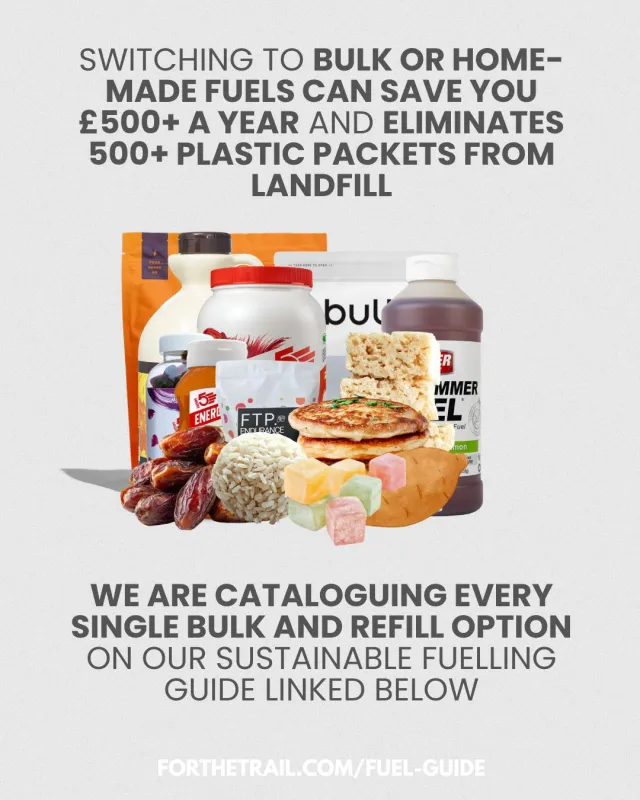
Reducing Plastic Waste in Endurance Activities
Another issue beyond cost is that of plastic waste that ends up in landfill, usually after a single-use, gel packets, powder sachets, chew packets and other plastic packaging go in to the bin after a single use.
Utilising a combination of reusable gear, like silicone soft-flasks and DirtBags, you can save on non-recyclable plastic waste, ask less of the planet and use reusable options which also give you the opportunity to save on money too.
Following the two areas of this guide means you can have a win win in terms of your nutritional plans.
You will be shown exactly how to save money with your fuelling and how to reduce plastic waste, these are the two main aims of this guide.
Types of Fuel for Endurance
We will cover the following types of fuel in this guide:
- Energy powders: buy in bulk from nutritional brands or make your own at home.
- Energy Gels: Buy in bulk from nutritional brands or make your own at home.
- Energy Chews + Bars: Buy in bulk from nutritional brands or make your own at home.
- Bulk bought snacks: Snacks similar to energy chews and bars which you can buy in bulk from supermarket stores.
- Real home made foods: That cost much less than nutritional brand products
And then we will cover each and every single scenario of fuelling within a myriad of endurance type running events, with the same principles and examples being used for other endurance feats, long distance swimming, hiking, fastpacking and cycling.
Quick Links to Product Recreations
Below is a table of every single fuel suggestion we have in this guide, to give you a quick breakdown of what you can save in terms of money and plastic reduction when comparing it to buying the comparable nutritional brand fuel source (gel, chew, powder) in a single-serve packet.
We based our numbers on fuelling at 60g of carbs per hour to show you the cost, savings and plastic amounts. To put it in to perspective on what you will be saving.
At standard retail prices, you're paying an average of £3.50 for energy gels and £4.80 for energy chews to hit the 60g of carbohydrate per hour target.
| Category | Fuel | Fuel Option | Alternative To | Cost/hr (60g Carbs) | Prep | Plastic reduced |
| Energy Chews | FTP Endurance Energy Pastilles | Bulk Bag | Single Packet | £2.62 | Decant in to Small DirtBag | 520 plastic wrappers |
| High5 Energy Gummies | Bulk Bottle | Single Packet | £1.74 | Decant in to Small DirtBag | 520 plastic packets | |
| Home-made Energy Chews | Single packet | £0.60 | Decant in to Small DirtBag | 520 plastic packets | ||
| Energy Gels From Brands | Open Fuel Gel Mix | Bulk Bag | Single Packet | $3.40 | Decant in to soft flask or Small DirtBag | |
| Active Root Gel Mix | Bulk Bag | Single Packet | £2.50 | Decant in to soft flask or Small DirtBag | ||
| High5 Refill Gel | Refill Bottle | Single Packet | £2 | Decant in to soft flask or Small DirtBag | ||
| Hammer Gel Bottle | Refill Bottle | Single Packet | $2.74 | Decant in to soft flask or Small DirtBag | ||
| Kendal Mint Co | Refill Bag | Single Packet | £1.66 | |||
| MuleBar Recharge Gel | Refill Bottle | Single Packet | €3.00 | Decant in to soft flask or Small DirtBag | ||
| UnTapped Maple Syrup | Refill Bottle | Single Packet | $4.32 | Decant in to soft flask or Small DirtBag | ||
| Home-Made Energy Gels | Maltodextrin energy gel | Bulk Bags | Single Packet | £0.40 | Decant in to soft flask or Small DirtBag | |
| Brown rice syrup energy gel | Bulk Bottles | Single Packets | £0.84 | Decant in to soft flask or Small DirtBag | ||
| Maple Syrup | Bulk Bottle | Single Packet | £1.34 | Decant in to soft flask or Small DirtBag | ||
| Sugar Energy Gel | Bulk Bag | Single Packet | £0.06 | Decant in to soft flask or Small DirtBag | ||
| Energy Powders | Tailwind Endurance | Bulk Bag | Single Packet | £1.92 | Decant in to soft flask or Small DirtBag | |
| High5 Energy Drink | Bulk Tub | Single Packet | £0.74 | Decant in to soft flask or Small DirtBag | ||
| Home-Made Energy Powders | Maltodextrin in Bulk | Bulk Bag | Single Packets | £0.40 | Decant in to soft flask or Small DirtBag | |
| Snacks | Stroopwafel | Bulk Packets | Single Packets | £0.52 | Decant in to Large DirtBag | |
| Chewy Sweets | Bulk | Single Packets | £0.51 | Decant in to Small DirtBag | ||
| Turkish Delight | Bulk | Single Packets | £0.68 | Decant in to Small DirtBag | ||
| Biscuits | Bulk | Single Packets | £0.60 | Decant in to Small DirtBag | ||
| Banana | £0.20 | |||||
| Dates | Bulk | Single Packets | £0.80 | Decant in to Small DirtBag | ||
| Home-Made Real Foods | Sweet Potato | £0.20 | Decant in to Large DirtBag | |||
| Short Grain Rice (Sticky Rice Balls, Rice Pudding) | £0.20 | Decant in to Small and Large DirtBag | ||||
| Potato Cakes | £0.50 | Decant in to Large DirtBag | ||||
| Chewy Rice Puff Crispy Bars | Bulk | Single Packets | £0.66 | Decant in to Small and Large DirtBag | ||
| Flapjack and Oat Bars | Bulk | Single Packets | £0.30 | Decant in to Small and Large DirtBag |
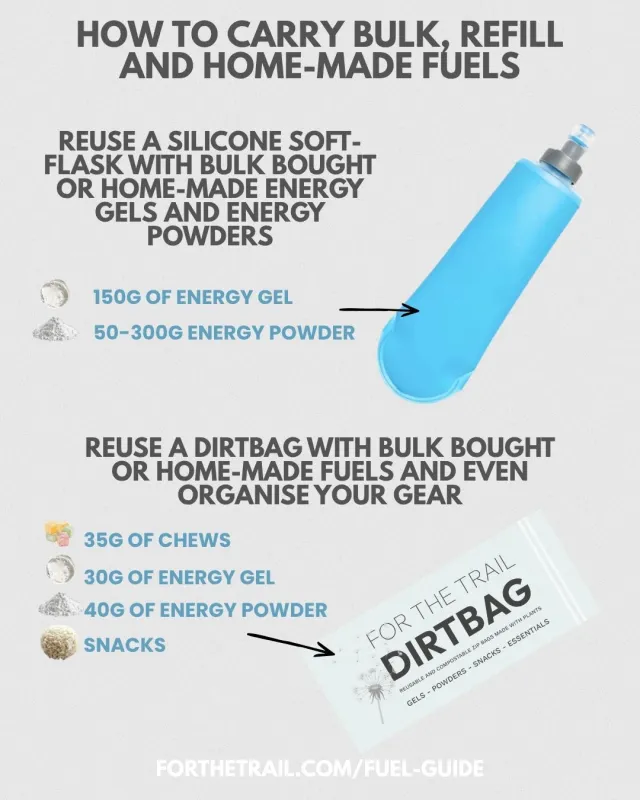
What is Required to Fuel Sustainably
The basics of it is that you require a carry system for your fuel and nutrition that is reusable, one of the most common pieces of equipment that you will find that can work in some scenarios is a silicone soft flask for nutrition.
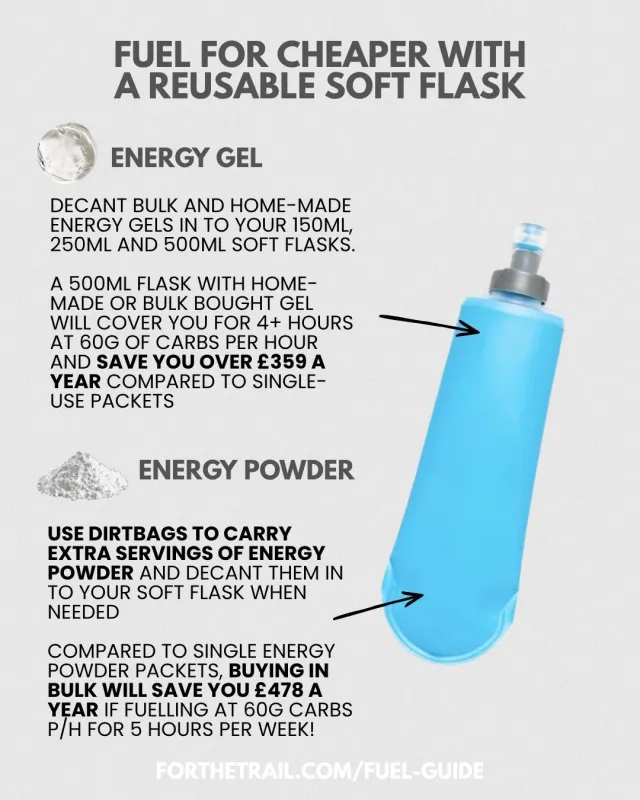
How To Carry Energy Gels Sustainably
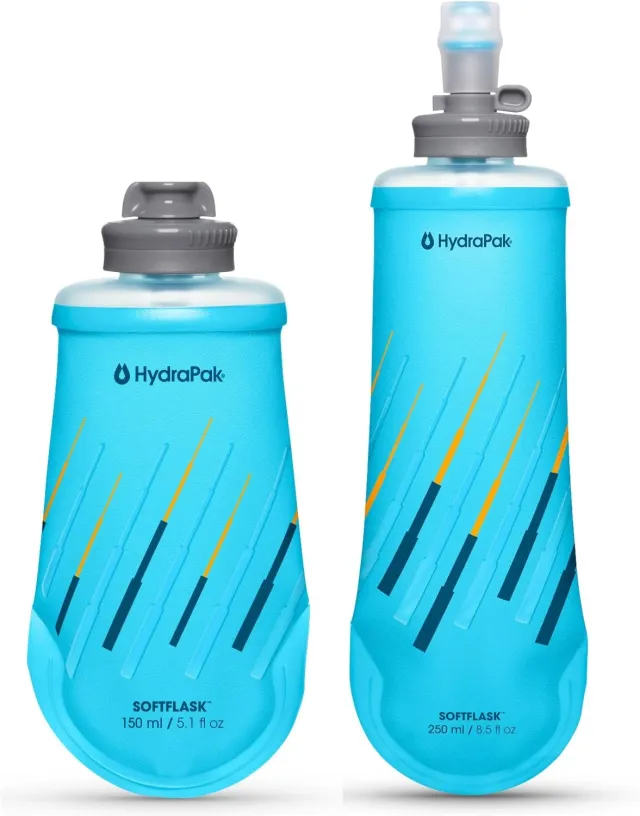
If you're fuelling with energy gels, then you're probably more than likely using single serve options, this is what we're trying to move away from with DirtBags. However, you might already have a silicone soft flask and if you do, you can start using bulk bought energy gels and home-made energy gels right now and decanting them in to your soft flask. We dive in to the pros of moving to a sustainable energy gel plan further down in the guide and we cover where you can buy bulk bought gels and how to make your own at home for a fraction of the cost.
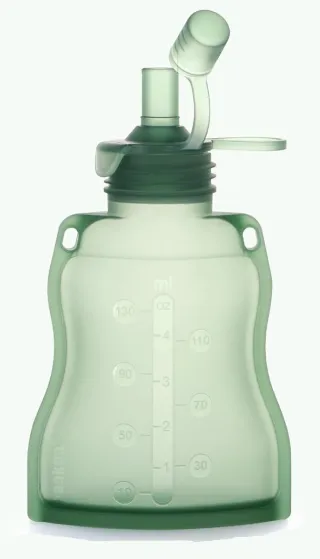
There is also one other alternative to single-use gels and carrying them more sustainably, that is silicone baby food pouches which can be bought slightly cheaper than Hydrapak Soft Flasks. They are slightly heavier than soft flasks as they aren't specifically designed with weight in mind but they can be robust, cheap to buy, hold your home-made energy gels or bulk bought energy gels but most importantly, they are reusable and made from silicone (mostly) just like soft-flasks we use for endurance sports.
Unfortunately, similar to soft flasks, they're not designed to carry energy powders in them, although you could try, but may struggle with decanting the powder out of them when you need to and they're much heavier than DirtBags, as well as not being able to hold any solids like energy bars, chews or other home-made snacks in them.
How To Carry Energy Powder, Energy Chews and Other Snacks More Sustainably
Soft flasks are great for carrying energy gels in bulk and great for using energy powders. Just add water and away you go, you've got your fuel with your water and this approach can cover all your requirements, hydration, electrolyes and fuel.
You can also carry spare energy powder in a spare soft flask by filling it with the powder of your choice. When your other soft flasks you are drinking from are empty, decant a serving of powder from the soft flask which is full of energy powder in to the ones you are drinking from.
Although this fuelling approach is possible, this is not an approach I would take because I prefer to have all my fuelling and hydration separate for redundancy, but it could work really well for you. What I mean by this is that I don't want to get my energy, my water and electrolytes all from the same source. There is no redundancy to this and it can lead to other issues, one of those is that you may need to fuel and require energy, but you don't need electrolytes or water for that 30-60 minutes, you're then forced to consume water and more electrolytes because it's an all in one nutritional plan.
You'll also be carrying extra weight with the soft flasks if you choose to use them to carry energy powders in bulk for long adventures and decant from, when they could be in something much lighter and easier to use, like DirtBags.
One of the biggest things with ultra-marathons and long endurance attempts and adventures is having as much planned and done before you even begin. This approach works well for fuelling too and if you can have your energy powder already set up in single-serving pouches, then you have to do less thinking when you need to top up your fuelling.
This is one of the reasons why energy powders come in single-serve stick packets that you decant in to a soft flask, they keep your precise carb amount powder dry and ready to be used when you need it with no extra bulk, no faff and no thought about what you need to do or how much to put in to your soft flask.
The issue with energy powder packets is that you end up creating waste once you've decanted the powder in to your soft flask, they're single-use and then on their way to the landfill.
We have just gone through how soft flasks are great for energy gels in bulk and can work with energy powder nutritional plans. However, they can't be used with solid fuel options and snacks like energy chews, sweets, energy bars or store small bits of equipment or gear.
There has never been an option on the market that covered all of these requirements until now; This is where DirtBags come in.
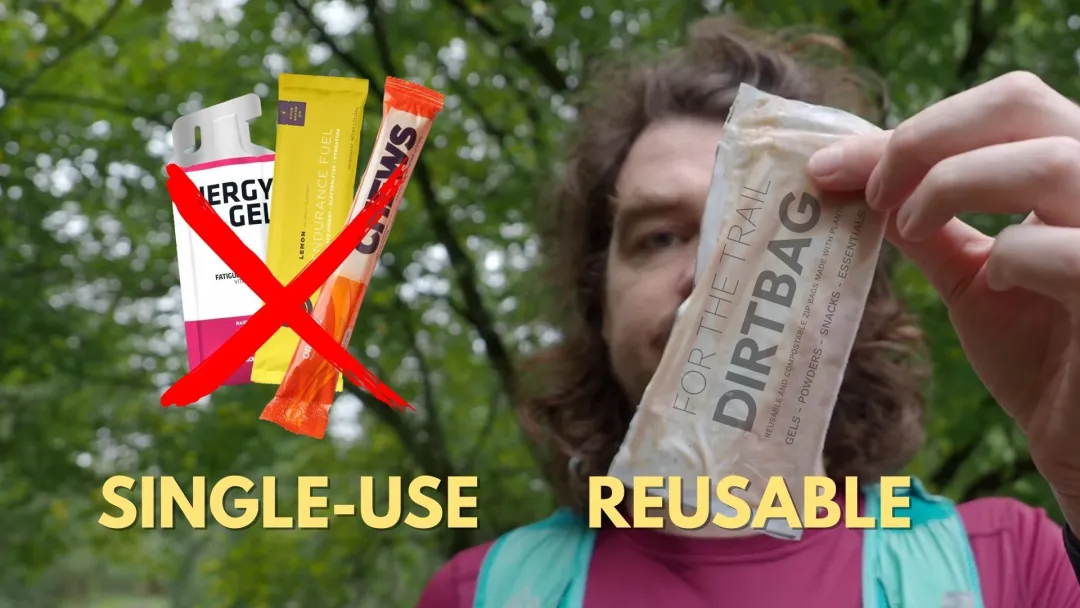
This is one of many prototype Small DirtBags that I made in late 2024 as I was continually testing and using them on my own adventures over a two year span.
If you're wondering how they work in all their different scenarios for fuelling sustainably, this quick guide should show you just that.
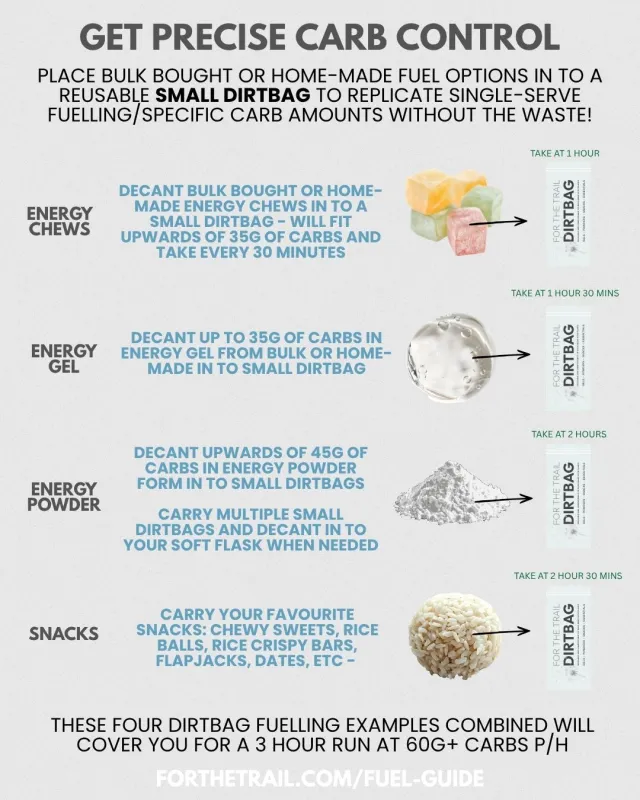
Above you have real life fuelling scenario examples of using Small DirtBags with energy chews, energy gel, energy powder and home-made or bulk bought snacks in them. Showing how you fill them up and then use them just like you would if you had bought pre-packaged, single-serving chew, gel, powder, snack packets that all end up in the landfill after a single-use.
The difference is that each DirtBag is taken home after using it, washed, dried, stored until they're needed again for the next adventure and then reused.
And below you can see me actually using my Small DirtBag prototypes with bulk bought energy-chews, bulk bought energy powder and refillable energy gels that I bought from nutritional brands in bulk and the energy chews I bought from a supermarket. Each fuel option below saved me money because I bought it in bulk and after i've emptied that individual Small DirtBag, I put the empty away in a Large DirtBag to take home, ready for their next adventure.
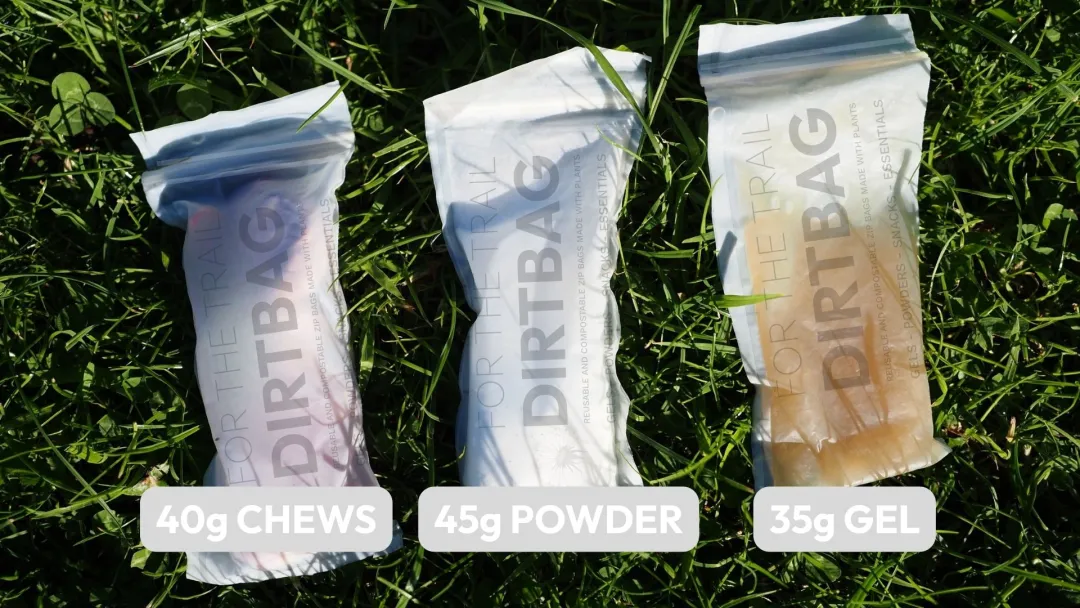
In the above Small DirtBag prototypes I have put;
- 40g of carbohydrates in the form of energy chews
- 45g of carbs in the form of energy powder
- 35g of carbs in the form of an energy gel
I filled each of these with bulk bought chews, bulk bought energy powder from a well known nutritional brand and a home-made energy gel, covering each example to show how to save money and use a reusable carry system that works just like their single-serving and single-use options that are the norm in endurance do.
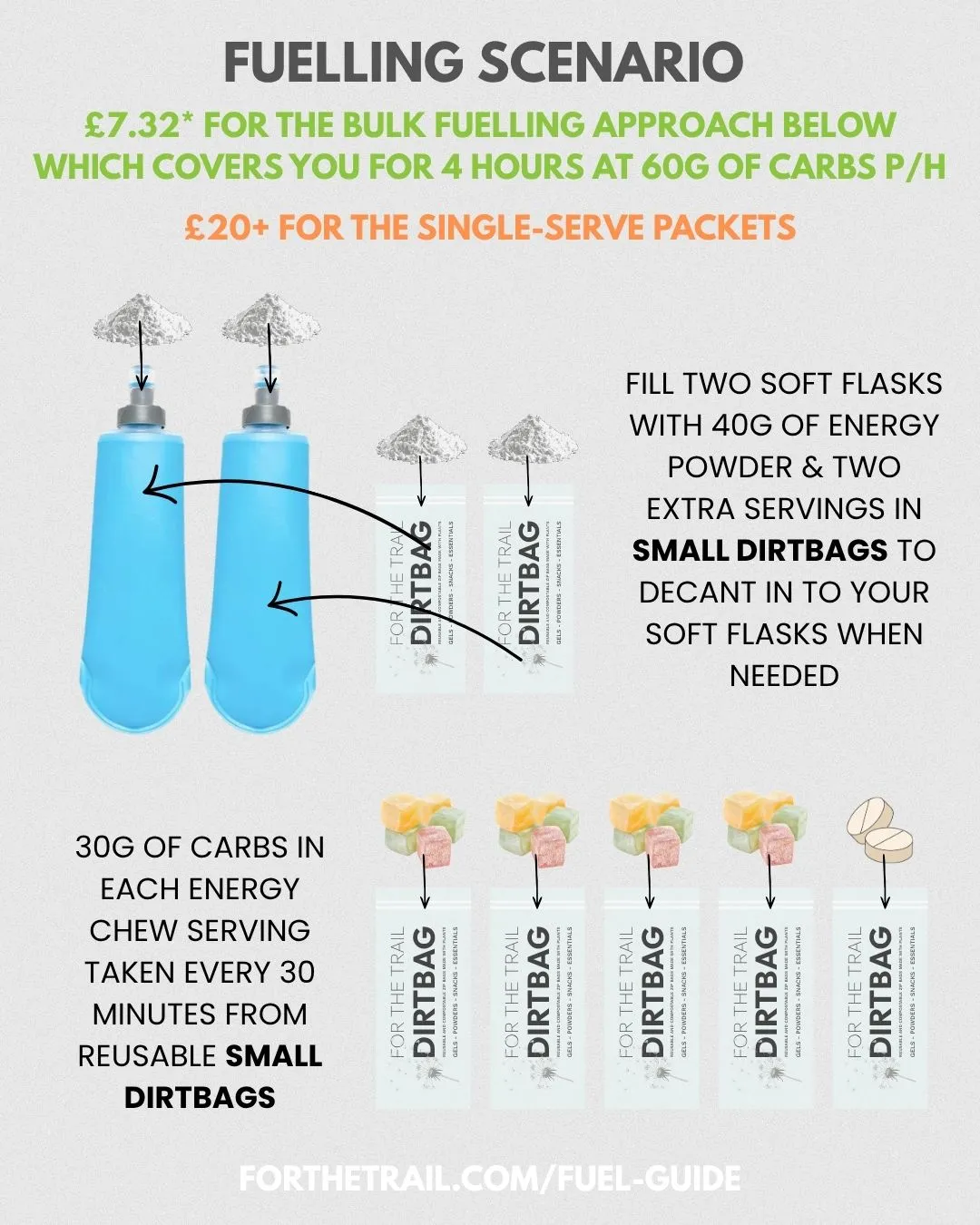
Above is a real life fuelling scenario for four hours worth of trail running. It uses two reusable soft flasks which you put a serving of energy powder in to each, with two extra energy powder servings in two Small DirtBags. These can be decanted in later when you need to top up your soft flasks with water.
There are also four Small DirtBags with 30g of carbs in the form of energy chews in them, simply decanted from bulk bought chews before your adventure. You just take one every 30 minutes and use the electrolyte tablets when you require them.
It's as simple as that, simply add the fuel of your choice to the Small DirtBags before your adventure depending on how many hours you estimate you'll require fuelling. For 6 hours worth of fuelling, you will require 10 Small DirtBags with your favourite nutritional product and fuel and you consume the contents of one Small DirtBag every 30 minutes.
I simply consume the chews in that one Small DirtBag every 30 minutes and every hour i'll get 80g of carbs. The same for the energy gel too. For the energy powder, every 30 minutes or when I get to a water source or aid station i'll decant the powder required in to my silicone soft flask.
With this method, using silicone soft flasks and DirtBags, and decanting bulk bought fuels or home-made nutrition in to them before the race or adventure, you will save a tremendous amount of money and after you've used them, you take them home, wash them, dry them and they'll all be ready to reuse again!
This is the basics of fuelling cheaper and reducing waste and below we'll get in to the actual energy sources and fuelling options that are sold in bulk, refill options or can be made by yourself at home.
Organise and Carry Gear and Equipment in Large DirtBag
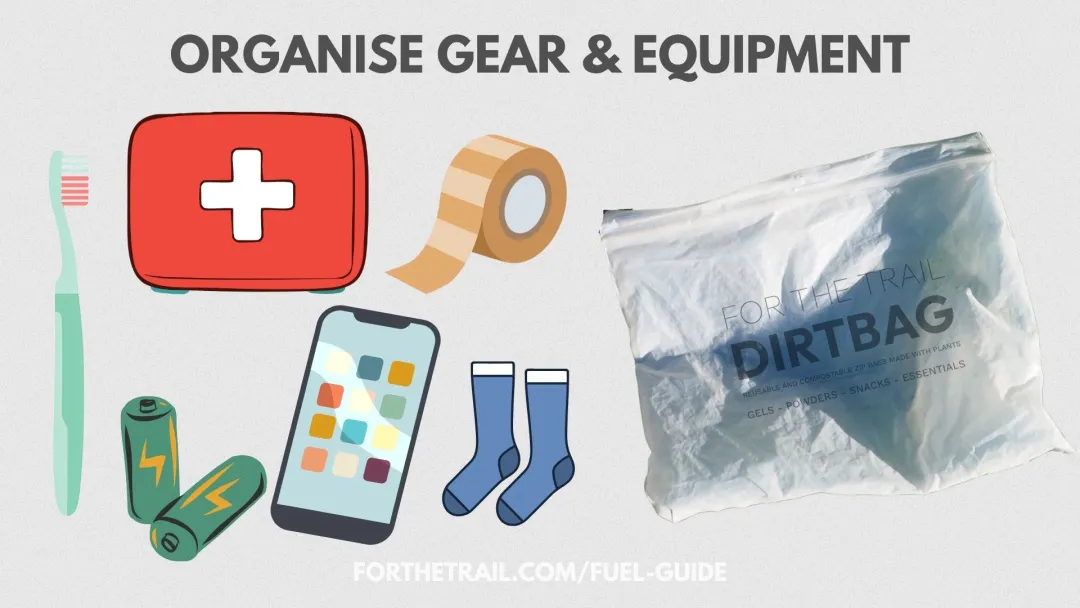
Although this guide is about how to fuel sustainably using Small DirtBags, there are also Large DirtBags too, which are 16x18cm in size and are perfect for bulk fuelling, just chucking in a tonne of snacks in to one DirtBag or for organising and carrying small bits of gear.
In the image below you can see an example of this where I show you can put spare batteries, headtorches, first aid kits to keep them dry, spare socks, a buff, gloves, a wash kit and even your smartphone can fit in them.
If this interests you as well, you can buy DirtBags here.
Complete List of Bulk and Refillable Endurance Fuelling Options From Nutritional Brands
This guide is basically narrowed down to two areas, buying bulk and refill options from nutritional brands and secondly, making your own fuels at home with bulk ingredients.
Before we dive in to the fuelling options and alternatives and scenarios you may use them in, we'd like to introduce you to another project of ours, www.findtrail.co
We built Find Trail, to help you answer very specific fuelling and ultra-marathon race queries. It's a database of energy gels, chews, powders and snacks where you can find fuelling options based on very specific requirements you may have, from price, through to ingredients and many many more, as each fuel option gets 50+ data points which helps with filtering, sorting and comparing.
One of the main filters that we have added to FindTrail food database is that of bulk fuel serving sizes. If you just want to see what what nutritional products, gels, powders or chews are available in bulk, just head to that link. You can further refine that filters to narrow down exactly what you're after.
Then it's as simple as combining the fuel you bought with reusable soft flasks or DirtBags to create your nutritional plan for your race and adventure.
Bulk buying from nutritional brands keeps things simple, saves you money and means you can still use fuels that you know work for you.
- Control exactly what goes in (no additives you don't want)
- You will save money
- Reduce packaging demand considerably
- You get precise portion control (no more "close enough" from a soft flask)
- DirtBags ask less of the planet in their production and life cycle compared to single-use plastic packaging
DIY Home Made Endurance Fuel Recipes
The second part to this guide on how to save money and reduce our plastic waste in trail running is to show you how you can make your own DIY and home made endurance fuel recipes.
These will follow two criteria, recreating nutritional brand recipes so you get like for like for a fraction of the price and also making your own at home from scratch which are not based on nutritional brand fuelling options. The latter will focus more on whole food recipes that have been proven to work time and again for long days out on the trail and are often foods and ingredients you can find easily in your local supermarkets or you may already have in your cupboards.
Here are some of the reasons we think it's important to look at making your own fuels at home:
- You can replicate expensive nutritional brand gels, chews and powders for much cheaper
- You know exactly what you're putting in to it
- This means you can also tweak them to your desire in various ways
- Choose to make more gut friendly options which have simpler formulas and less ingredients
- Decant them in to DirtBags, Small or Large, get precise carb amounts for your specific nutritional plan
Welcome to The Sustainable Fuelling Guide for Endurance
Now you know how to carry bulk, refill and home-made food and fuel options, it's time to look at the fuel options we can choose from.
There is a lot to take in in this guide, but the easiest way to work out what works for you is to just try one thing at a time on your training and long runs and practice with this for weeks at a time, if you do a block of 12 weeks, 4 weeks one fuel option, add a different fuel option for the next four weeks so that you are testing out two fuel options at the same time. The final four weeks add a third fuel option so that you end up testing three different fuel options for this final 4 week block.
This guide will be continually updated, especially when it comes to nutritional brands who offer bulk offerings of their energy gels, energy powders and energy chews and other endurance fuel options.
Fuelling With Energy Chews
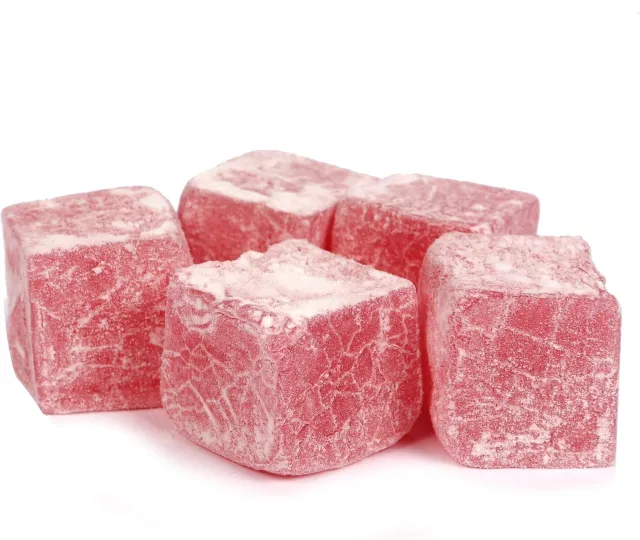
Whats great about energy chews is that they're almost entirely made of sugar, they're basically just soft, chewable sugar cubes. They have been my default energy type of choice the last couple of years and I even managed to fuel multiple ultra-marathon races of 50-65km just on chews alone.
They're super easy to consume, taste great, aren't messy like energy gels are and this means they're so much easier to manage, store and use when you need them. You can share them much more easily if you find someone who is low on energy, they don't have any liquid weight with water in it like a gel which is wasted weight and getting used to energy chews means you can fall back on chewy sweets which can be bought anywhere whereas gels don't have direct replacements in supermarkets.
Similar to gels and powders, they come in a single serving plastic packet which ends up in landfill and cost a lot of money for very little energy. In this guide we will look in to;
- Where you can buy energy chews in bulk from nutritional brands.
- Where you can buy ingredients in bulk to recreate nutritional brand energy chews at home.
We look at both home-made energy chews and chews you can buy in bulk from nutritional brands, with both options saving you money compared to single-use offerings and both options also reducing the amount of sinlge-use plastic waste we create too.
Bulk Bought Energy Chews From Nutritional Brands
When we first started thinking about how I could fuel more cheaply whilst still getting similar nutrition to that of the pros I honestly thought energy chews would be one of the easiest types of fuel to find in bulk offerings.
How wrong was I, there are virtually no nutritional brands offering energy chews in bulk when we first started this project and guide, it didn't make sense!
I've been keeping a database up to date where you can find bulk bought energy fuel options, this list specifically shows energy chews you can buy in bulk. As I find more energy chews you can buy in bulk, they will be added to that list.
It wasn't until two years in to making DirtBags when I found the first ever nutritional company that sells energy chews in bulk so hopefully DirtBags can help the industry turn that corner and more brands offer energy chews in bulk.
For now, below you will find a complete list (as far as we are aware) of nutritional brands that sell energy chews in bulk.
FTP Endurance Energy Pastilles in Bulk
FTP Endurance Energy Pastilles and Chews are one of the first ever energy chews from a nutritional brand i've found from a nutritional brand that sell them in bulk!
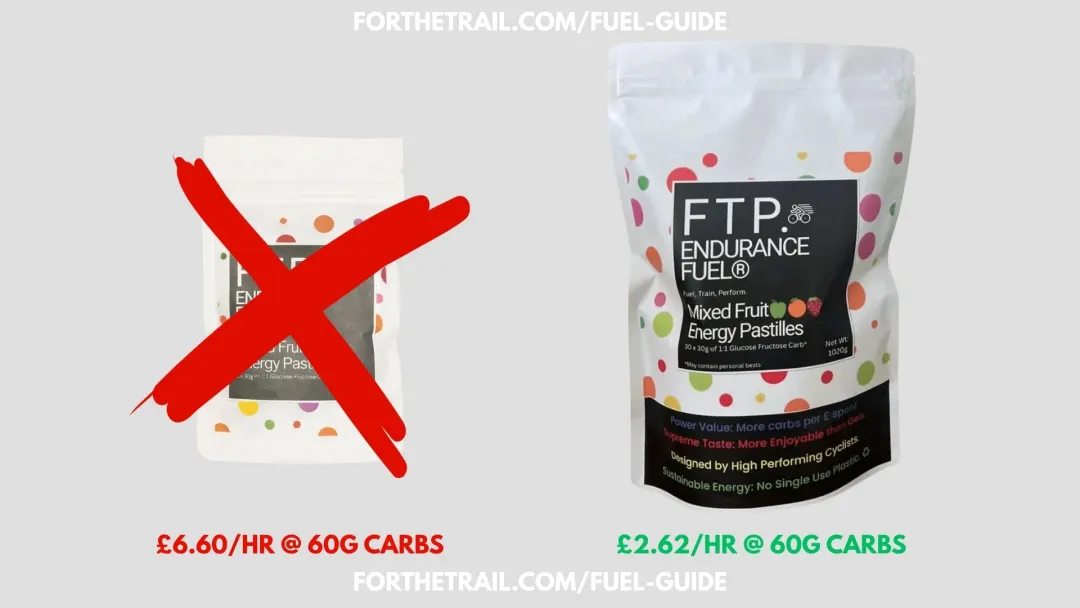
By opting for FTP’s 1kg bulk bag over individual taster packs, you slash your cost per 30g chew from £3.00 down to just £1.33, achieving a massive 55% reduction in your fueling costs. While single-serve packs demand a premium of £6.60 to hit a 60g carbohydrate target, the exact same energy from a bulk bag delivers that energy for only £2.62 per hour.
This shift brings your price per 100g of carbohydrates down from £9.97 to just £4.35, effectively saving you £5.62 for every 100g of fuel you burn on the trail.
If you're interested in it's carbohydrate offering, these energy chews have 90g of carbs per 100g of weight, which is really high and a great option for fuelling.
FTP Endurance Energy Pastilles are made with sugar, which means they contain 50% glucose and 50% fructose. You can potentially fuel upwards of 120g of carbs per hour with this energy chew and do not need to add anything extra or change it to attempt that fuelling plan.
This would cost you £5.24 per hour to fuel at 120g of carbs per hour which I would recommend at 30g of carbs every 15 minutes using a Small DirtBag.
The financial impact, at a fueling rate of 60g of carbs per hour, will see your weekly cost drops from £33.00 to just £13.10, putting £19.90 back in your pocket every single week. For an athlete training 5 hours a week, this simple bulk purchase generates annual savings of over £1,035 while preventing the waste of 520 individual plastic wrappers per year from the single-serving plastic packet options they sell.
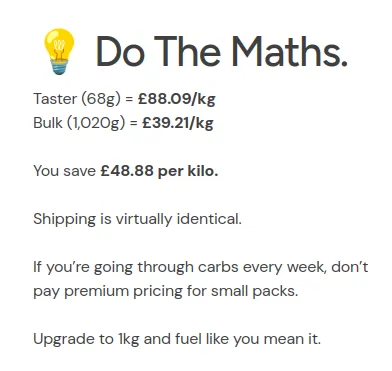
What we love and admire about what FTP Endurance are doing is that they actively state on their website (image above) that you should buy the refill and bulk options of their energy chews, as it will save you a lot of money and also reduce your plastic packet waste too. This image is literally from their own website and states you will save £48.88 per kilo by choosing the bulk energy chews they sell.
How To Carry Bulk FTP Endurance Energy Pastilles
Simply buy the bulk 1kg bag that comes with 30 x 30g carb energy chews and decant one energy chew in to a single Small DirtBag. Every 30 minutes, take out your Small DirtBag, consume the entirety of it's contents, in this case it would be a 30g energy chew from FTP Endurance and then put the empty Small DirtBag in to an empty Large DirtBag, I usually keep my Large DirtBag in my right hand vest pocket with all my other empties. It's that simple.
Save £1035 per year with FTP Endurance Energy Pastilles in Bulk and eliminate hundreds of plastic wrappers by transitioning from premium single-serve chews to their high-volume 1kg refill packs and decanting them in to DirtBags.
Buy DirtBags to decant FTP Endurance Energy Pastilles in to for precise servings and carb control.
High5 Energy Gummies in Bulk
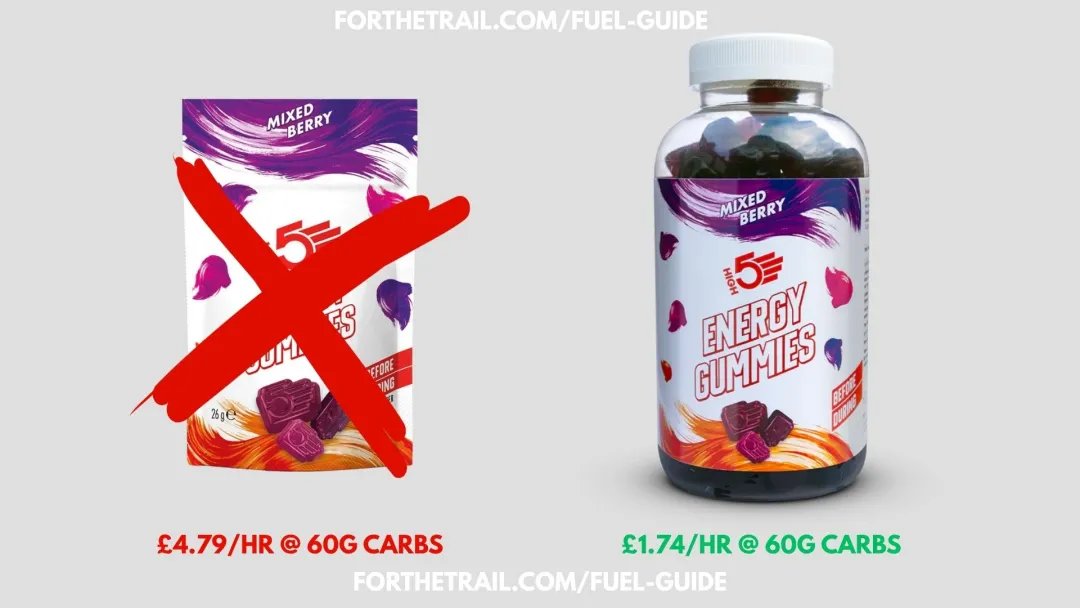
Whilst creating this guide, we found another brand here in the UK that offer energy chews in bulk offerings, High5.
With a dense 80g of carbs per 100g, these chews offer a mess-free, shareable alternative to gels that won't freeze in winter or leak in your pocket. Just take 6 small gummies every 20 minutes and you'll hit that 60g of carbs per hour fuelling strategy.
By transitioning from individual single-serve packs that High5 sell, to a recyclable bulk bottle of 144 gummies, you drop your cost per serving from £1.60 down to just £1.04 per serving, achieving a massive 64% reduction in your fueling costs.
While relying on individual sachets costs you £4.79 per hour to hit a 60g carbohydrate target, the exact same High5 formula from their bulk bottle delivers that energy for only £1.74 per hour.
This shift brings your price per 100g of carbohydrates down from £7.62 to just £4.95, effectively saving you £2.67 for every 100g of fuel you consume on the move.
The financial impact over a year is incredible, if you are fueling 5 hours per week at a 60g/hour rate, your weekly cost drops from £23.95 to just £8.70, putting £15.25 back in your pocket every single week. This simple bulk purchase generates annual savings of nearly £800 while preventing the waste of 520 non-recyclable plastic packets per year by utilising a reusable DirtBag system.
How To Use High5 Energy Gummies in Bulk
What we love about the High5 Energy Gummies is that they actively show you in their marketing that you should be buying their chews in bulk and then just decanting them in to something that you can reuse, you can see that below.
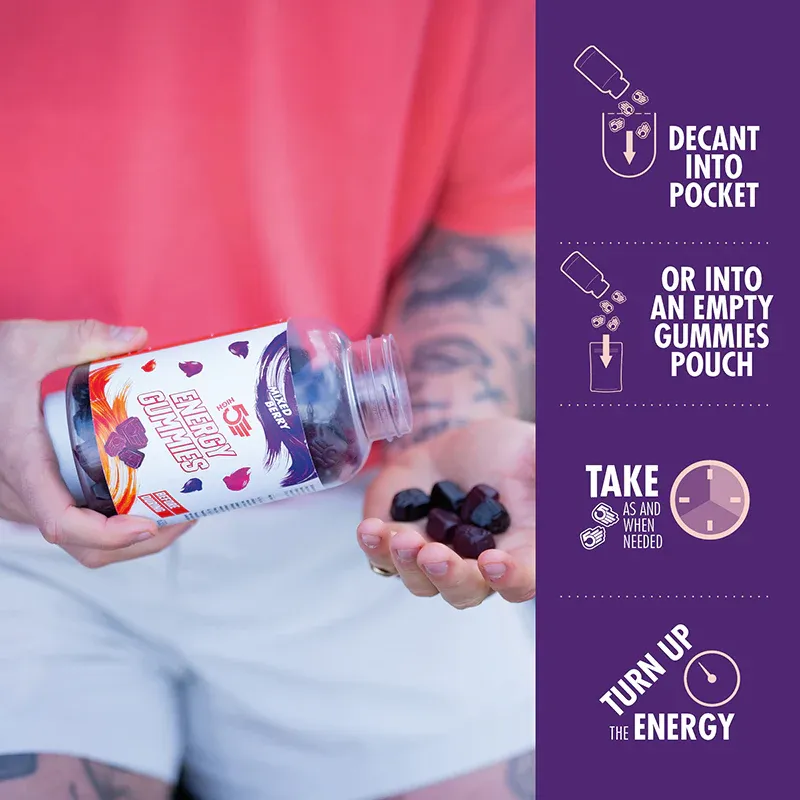
And there was nothing previously on the market for this purpose, same with energy powders too and is the main reason we created DirtBags so that you can put in 6 gummies in to a Small DirtBag and you'll get 20-30 minutes of energy, all without the waste.
With High5 Gummies you can save £794 per year and eliminate over 500 plastic packets from the landfill by simply swapping single-serve sachets for the bulk bottle.
Buy DirtBags to decant High5 Energy Gummies in to for precise servings and carb control.
Fuelling With Home-Made Energy Chews
Below we introduce how you can fuel really cheaply on home-made energy chews compared to buying chews from nutritional brands. You'll still get the same carbohydrates and energy but at a fraction of the price and you'll be surprised how easy and quick it is to make your own DIY energy chews.
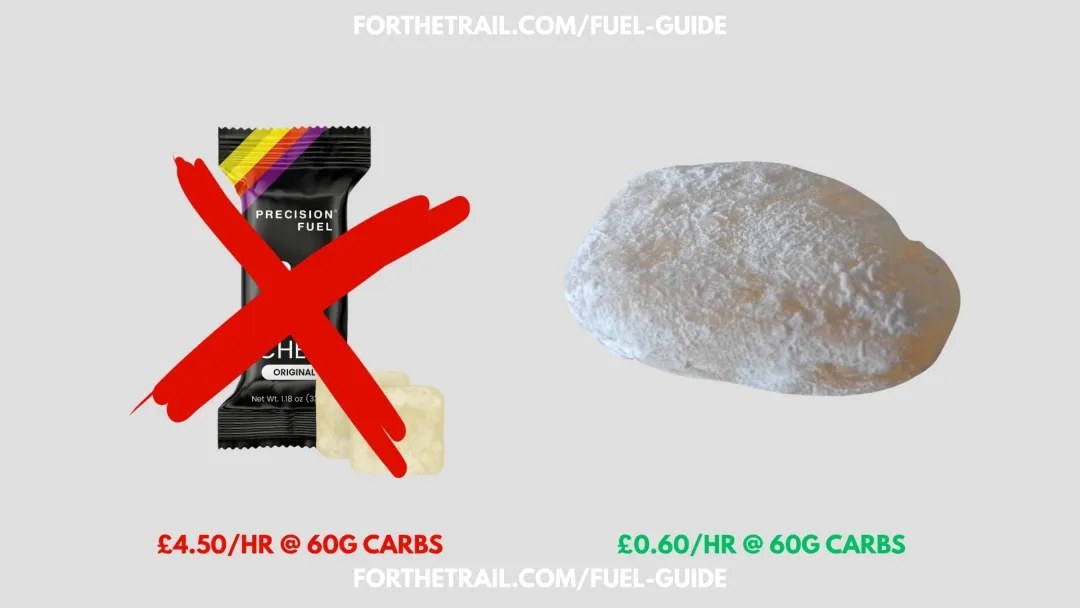
Recreating the Nutritional Brand Energy Chews
Over the years i've found myself moving more to energy chews as my main fuel source when out for long days on the trail and it's quite simple to make your own and even recreate nutritional brand energy chews like the Precision Hydration PF30 Energy Chews which I show below.
Above is a single energy chew that I have made which can be done with just maltodextrin powder or even with a bulk bought energy powder from a nutritional brand that is a mix of maltodextrin, fructose, flavourings, sodium, etc. It takes less than 10 minutes to make and put in to a silicone ice cube tray or baking tray to let it set and get firm.
This is how simple a home-made energy chew recipe can be; 200g of maltodextrin, 100g water, 10g agar agar, thats it. The energy chew above contains about 10g of carbs and coated in corn starch so it isn't sticky when you grab it. All you have to do is take two of them every 20 minutes and you're well on your way to 60g of carbs per hour.
If you're wondering if this home made energy chew is any good and has the right ingredients in it, just take a look at the Precision Hydration PF30 energy chews. They are literally just sugar and thickener (starches are common) and cost £2.25 per pack for 30g of carbs. the home made chew pictured above cost less than 20p for the exact same thing and I use agar agar to thicken the chews instead of starches, it just needs heating for a few minutes to make them firm.
It's super simple to make your own energy chews which replicate a "high performance" energy chew like the Precision Hydration for just a fraction of the price that can just sit in your fridge for a couple of weeks, ready to be used when you need them.
How To Make Your Own Home Made Energy Chew
You only need these ingredients:
- Maltodextrin powder - Buy @ Amazon
- Fructose powder (optional) - Buy @ Amazon
- Agar agar powder - Buy @ Amazon
- Salt for sodium
- Lemon or other flavouring
Recipe:
- I put 200g of maltodextrin powder and 10g of agar agar powder in to a glass bowl, mix it up for a few seconds.
- Play with ratios of maltodextrin and fructose to see what works for you, but I recommend just starting with maltodextrin first.
- Boil the kettle and measure 100g of boiling water and add to a saucepan, this is so that the water isn't evaporating why you try and heat it on the pan
- Add the dry ingredients (maltodextrin and agar agar)
- Add your flavouring, a squirt of lemon juice and salt if you require
- Once you see it boiling with all the ingredients together (not just simmering), but almost frothing and moving rapidly with lots of energy, continue to stir it for up to 3 minutes, it needs this time to activate the agar agar to thicken.
- Pour in to a silicone ice tray mold or a glass baking tray or something similar so you can cut it up and portion later
- Cool for at least 1 hour at room temperature
- Place the tray in the fridge, make sure it has a lid, they are good for a couple of weeks then
- When you want to use them, take them out of the tray and roll in corn starch to prevent sticking.
- Place two to three chews in to a Small DirtBag (weigh to get precise carb amounts) and add a little more corn starch in to the bag so that when you grab them a few hours later or the next day during an adventure, they're still nice and dry to touch and not sticky.
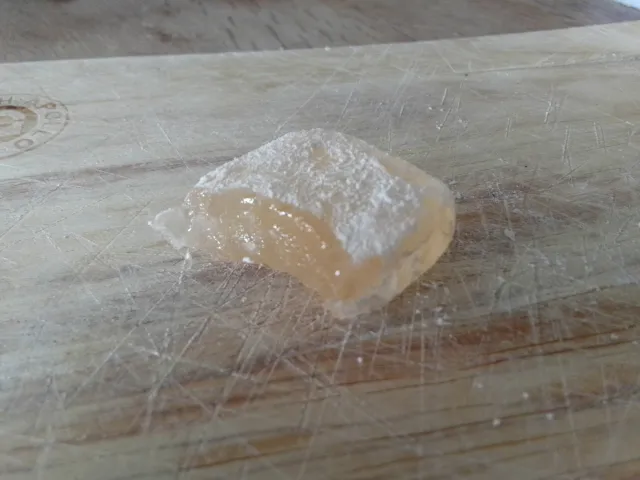
Above you can see a PF30 energy chew on the left and my 10g carb home made energy chew on the right which uses maltodextrin powder, agar agar and orange flavouring, thats it.
By crafting your own maltodextrin-based energy chews, you slash your cost per 30g serving from £2.25 down to just £0.30, achieving a staggering 87% reduction in your fueling cost. While relying on single PF30 chews costs you £4.50 per hour to hit a 60g carbohydrate target, your homemade version delivers the exact same energy for only £0.60 per hour. This shift brings your price per 100g of carbohydrates down from £7.50 to a mere £1.00, effectively saving you £6.50 for every 100g of fuel you burn on the road or trail.
The financial impact over a year is incredible. If you are fueling 5 hours per week at a 60g/hour rate, your weekly cost drops from £22.50 with the PF30 energy chews to just £3.00 with the home-made option, putting £19.50 back in your pocket every single week. This approach generates annual savings of over £1,000 while preventing the waste of 520 plastic wrappers per year.
With a dense 90g of carbs per 100g, these DIY chews offer a professional-grade 100g of carbs per £1 spent.
DIY energy chews: 87% cheaper than PF30, zero packaging, made in your kitchen and you save £1,014 a year.
How To Use DIY Energy Chews
And all you have to do is place them in to a Small DirtBag to get the same precise carbohydrate fuelling strategy as if you'd bought energy chews in a single-use wrapper, when you want that specific amount of carbs, just take it out of your pocket, consume the contents, place the empty DirtBag in to a Large to keep safe and continue on with your adventure.
Buy DirtBags to decant your home-made energy chews in to for precise servings and carb control.
Fuelling With Energy Gels
Most people in trail running and endurance sports have used single-use energy gels, they are convenient as they come in single serving packets, so you know how many carbs you're getting. However, each serving creates plastic waste that ends up in landfill and they can get expensive, fast!
In this section we look in to;
- Where you can buy energy gels in bulk from nutritional brands, yes they do exist!
- Where you can buy the ingredients to recreate nutritional brand energy gels in bulk
- How to make your own DIY style energy gels at home in bulk with a focus on whole food ingredients
Refillable Bulk Energy Gels From Nutritional Brands
Do you have energy gels that already work for you or don't have the time to make your own at home? Not to worry, by transitioning from single-serve energy gel options to bulk bought energy gels in larger refill bottles from nutritional brands, you can still get an easy to digest energy gel whilst saving money and reducing plastic waste at the same time.
You can find an ever growing list of energy gels you can buy in bulk on our partner website Find Trail and we continue to keep that database and this sustainable fuelling guide updated every few weeks as and when new bulk bought energy gels come out.
Below we'll introduce you to the energy gel companies that currently create energy gel refills and bulk offerings that you can decant in to your already owned silicone soft flask or in to a Small DirtBag for single serve fuelling, just like you'd get with a single-use energy gel.
- Open Fuel Energy Gel Mix
- High5 Energy Gel Refill
- Hammer Nutrition Energy Gel Bottle
- Active Root Energy Gel Mix
- Kendal Mint Co Energy Gel Refill
- Mulebar Kicks Energy Gel Bottle
The great thing about bulk bought and refillable energy gels is that you are reducing as much as 60% of the packaging and most of these options also use recyclable packaging, compared to demanding more plastic packaging with the single-serve options which all end up in landfill. So that when you've finished with the packaging, tub or bottle that has the energy gel in it, you can reuse it or recycle it, unlike single-serving gels that are single-use.
Some other positives of this approach are;
- Less plastic packaging, upwards of 60%
- The packaging is mostly recyclable or reusable
- You can decant exact amounts in to a silicone soft flask, or Small DirtBag
- You can actually tweak these gels and add other ingredients if you wish
- You can change the thickness of some of them, like the Active Root energy gel mix powders as you add water to create them
- They will save you a lot of money compared to the single serve options from the same brand
Open Fuel Bulk Energy Gel Mix
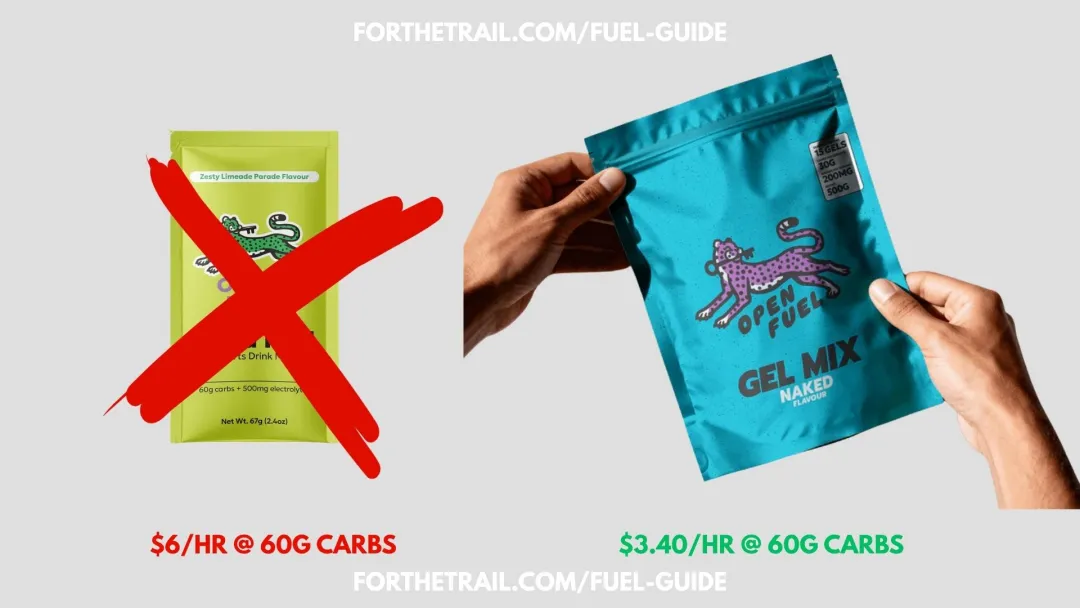
Open Fuel's Energy Gel Mix is a customisable energy gel mix powder, allowing you to fine tune your fuelling because it's a mix you make yourself, it comes in a dry powder form that you simply add water too. By moving from their single packet offerings to this versatile gel mix you can make a gel as thick or as thin as you like, something you are unable to do with single-serve energy gels already packaged by nutritional brands.
What we love about this option is that they actively mention the impact on trash by choosing this instead of the single-use gel wrappers that you might have previously been using. "30g of carbs and 200mg of sodium per serving, a crisp neutral flavor, and no more trash on trails from empty gel wrappers."
It has the main ingredients as maltodextrin and fructose, so that means you can fuel more than 60g per hour with this but it doesn't state its ratio of those two ingredients. If it's 1:1 then it means you can potetntialy fuel upwards of 120g with it. If it's more like a 2:1 ratio of maltodextrin to fructose, you can fuel upwards of 90g of carbs per hour with it.
While standard singles demand a premium of $3.00 per serving, the bulk energy gel mix powder delivers a concentrated 90g of carbohydrates per 100g of dry mix, bringing your cost down to just $1.70 per serving.
Switching to a gel mix reduces your hourly fuelling cost from $6 to $3.40 per hour at 60g of carbs. This is a 43% saving that results in an annual saving of $676 for an entire years worth of fuelling, at 5 hours per week.
Beyond the savings, the system is designed for sustainability as you massively reduce your single-use plastic waste too.
Control your fuel thickness and serving sizes with Open Fuel Gel Mix, $676 saved per year and zero single use gel packets going to landfill
How To Use Open Fuel Energy Gel Mix
Decant the Open Fuel Gel Mix in to a silicone soft flask and add water for a multi-hour fuelling plan or portion a single serving of the gel mix powder in to a Small DirtBag and add a splash of water which replicates the convenience of a gel packet without the waste. You can make this gel as thick or as thin as you would like because you control the water amounts and you can even replace water with coconut water or other similar offerings to further enhance your gels.
Buy DirtBags to decant Open Fuel Energy Gel Mix in to for precise servings and carb control.
Buy Soft Flasks to decant Open Fuel Energy Gel Mix in to and fuel your runs from a reusable option.
Active Root Energy Gel Mix Refill
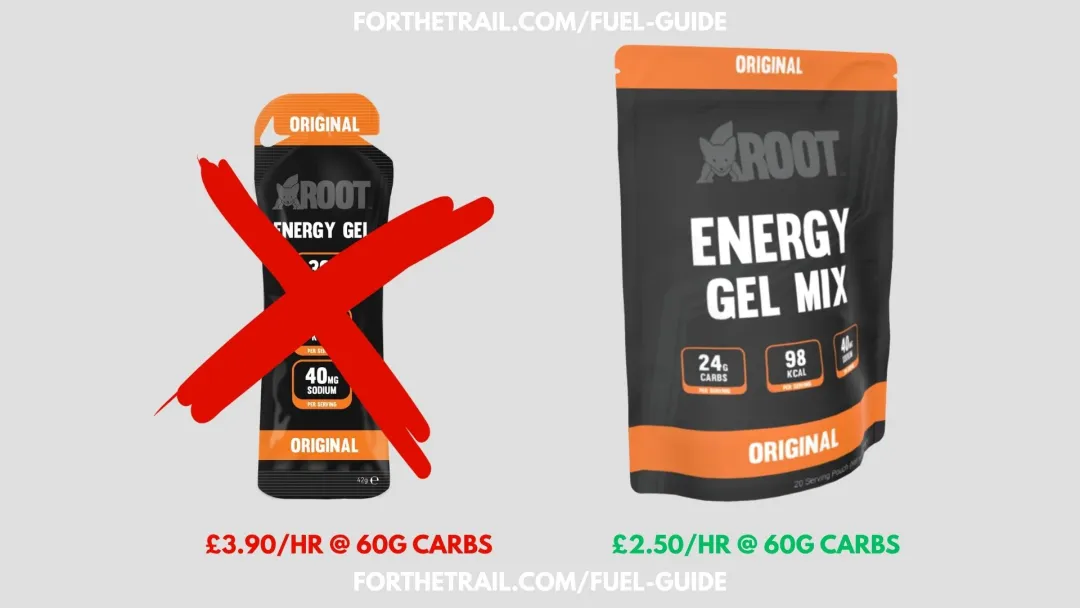
From one energy gel powder mix to another, Active Root is a nutritional brand in the UK that has put a focus on ginger root in it's formulas to help with your guts on longer endurance activities.
With this energy gel mix, similar to Open Fuel, you portion the powder in to a silicone soft flask or DirtBag, add the amount of water you want which makes the gel the thickness that you like and thats it.
They use cane sugar blend as the main ingredient which means you get a ratio of 1:1 with glucose and fructose which means you can aim to hit upwards of 120g of carbs with this fuel option.
The single serve is £6.50 per 100g of carbs, whilst the energy gel mix is £4.17 per 100g carbs, making it £2.33 cheaper for every 100g of carbs you consume, that adds up and quickly!
Active Root energy gel mix costs £2.50/hr vs £3.90/hr (60g of carbs) for the single serve energy gels that Active Root sell, which saves you £364 a year if you were to fuel for 5 hours per week using this fuel source.
By choosing to mix your own energy gels with their mix, you are reducing your costs by 36% and reducing single-use plastic waste dramatically too.
If you were to aim for 100g of carbs per hour, the price per 100g of carbs for a single energy gel is £6.50 per 100g carbs. Whilst the bulk offering linked above works out at £4.17 per 100g carbs, that's a saving of £2.33 for every 100g of carbs you consume, over 5 hours thats over £11 in savings just for one long run.
"The Active Root Gel Mix Strategy: Save £364 per year and eliminate over 500 plastic gel packets by switching from their single-use gels to the high-performance bulk energy gel mix
Decant the Active Root Energy Gel Mix in to a silicone soft flask and add water for a multi-hour fuelling plan or portion a single serving of the gel mix in to a Small DirtBag and add a splash of water which replicates the convenience of a gel packet without the waste.
Buy DirtBags to decant Active Root Gel Mix in to for precise servings and carb control.
Buy Soft Flasks to decant Active Root Gel Mix in to and fuel your runs from a reusable option.
High5 Bulk Refill Energy Gel
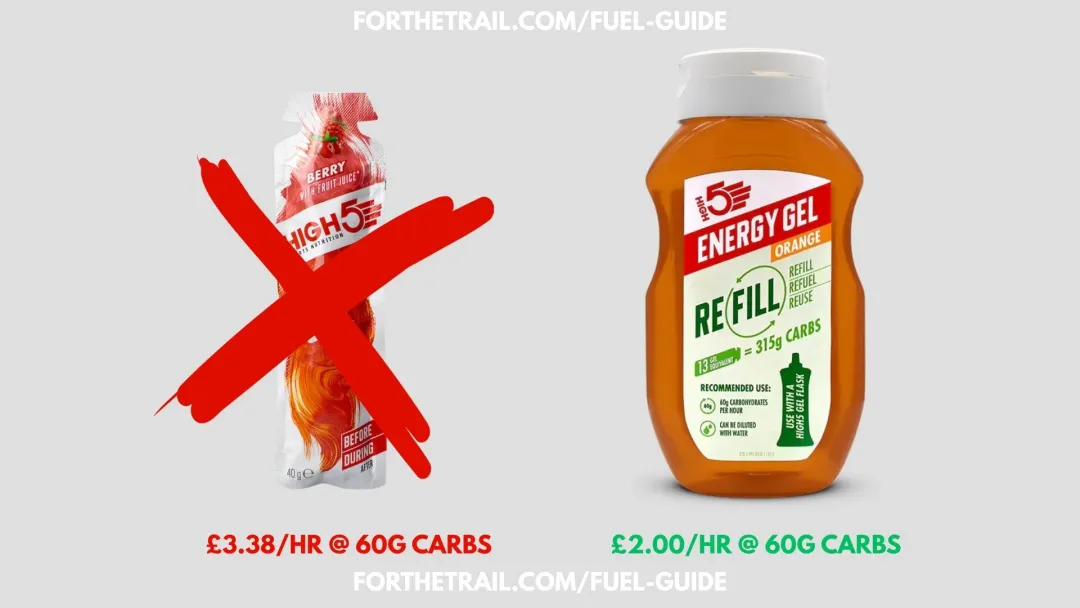
Now we've gone through bulk energy gels that come in powder form that you create, we now look at ready made energy gels that you simply decant in to a soft flask or Small DirtBag to use when you need.
The difference with High5 gels to their competitors is that they only use maltodextrin as the fuel source, so you can only top out at 60g of carbs per hour with this energy gel and nutritional plan. The upside of this is that when adding fructose as well, this is when your stomach can start to get issues so you might find it easier to take than other gels just because of this.
By swapping individual gel packets from High5 for the 750ml bulk refill bottle, you drop your cost per 23g carbohydrate serving from £1.30 down to just £0.77, achieving a massive 41% reduction in your fueling cost.
While relying on single-serve gels costs you £3.38 per hour to hit 60g of carbs, the exact same High5 formula from a bulk bottle delivers that same 60g of carbs for only £2.00 per hour. It's the exact same energy-gel, just packaged differently and you save £1.38 every hour of fuelling at 60g of carbs.
If you were to aim for a few more carbs per hour, this shift brings your price per 100g of carbohydrates down from £5.65 to just £3.35, effectively saving you £2.30 for every 100g of fuel you squeeze into your flask.
For an athlete fueling 5 hours per week, your annual spend drops from £878 to £519. Beyond the £359 in yearly savings, you are preventing over 500 non-recyclable gel packets from hitting the landfill by utilising a reusable soft flask or Small DirtBag system to fuel from on your adventures.
Switch to High5 Bulk Refills and save £359 a year and that's 500 gel packets kept out of landfill too.
Buy DirtBags to decant High5 Energy Gel Refill in to for precise servings and carb control.
Buy Soft Flasks to decant High5 Energy Gel Refill in to and fuel your runs from a reusable option.
Hammer Nutrition Energy Gel in Bulk
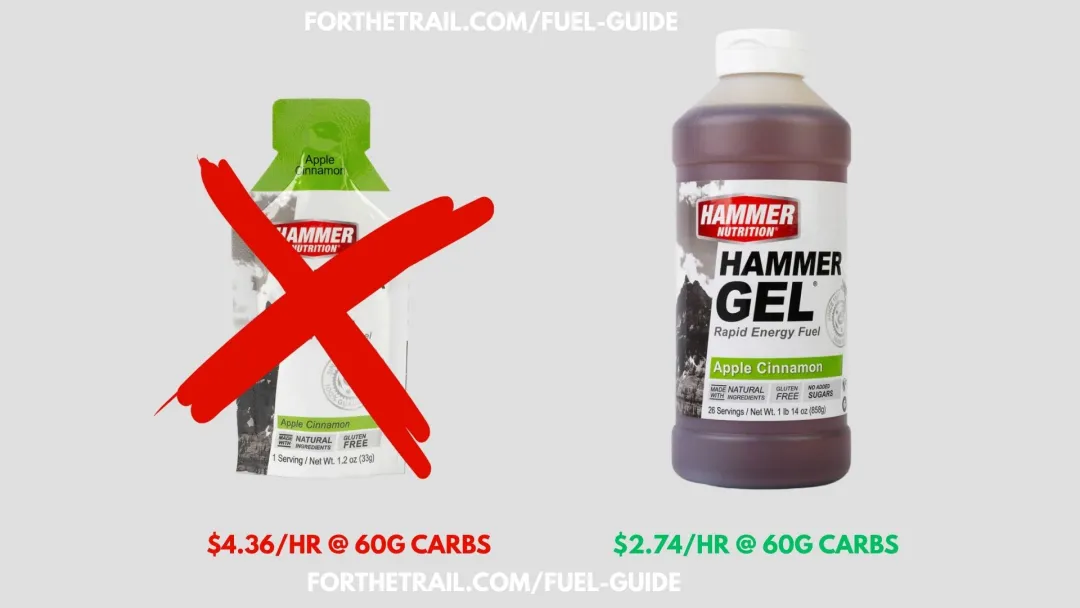
Hammer Nutrition gels have a carb ratio of 67g per 100g and their main ingredient is maltodextrin and are similar to the High5 energy gels in that it's a ready made gel that comes in a large bottle, ready to use.
This energy gel is very similar to the High5 above, using just maltodextrin as its main fuel source and sugar type and this means you can only top out at 60g of carbs per hour with this gel option.
By transitioning from individual 33g Hammer Gel single serving packets to the 26-serving bulk bottle, you drop your cost per serving from $1.46 down to just $0.96 per serving, achieving a massive 34% reduction in your fueling cost. While relying on single-serve gels costs you $4.36 per hour to hit 60g of carbs, the exact same Hammer formula from a bulk bottle delivers that energy for only $2.74 per hour.
This shift brings your price per 100g of carbohydrates down from $6.64 to just $4.36, effectively saving you $2.28 for every 100g of fuel you consume.
For an runner fueling 5 hours per week at carbohydrate rate of 60g/hour, your weekly cost drops from $21.80 to just $13.70, putting $8.10 back in your pocket every single week. This simple bulk purchase generates annual savings of over $420 while preventing the waste of 520 non-recyclable plastic gel packets per year by utilising a reusable DirtBag or soft flask system.
Hammer gel in bulk: 34% cheaper, 520 fewer packets - $421 saved every year.
Decant the bulk Hammer Nutrition energy gel in to a silicone soft flask for a multi-hour fuelling plan or portion a single serving in to a Small DirtBag which replicates the convenience of a gel packet without the waste.
Buy DirtBags to decant Hammer Nutrition Refill Energy Gel in to for precise servings and carb control.
Buy Soft Flasks to decant Hammer Nutrition Refill Energy Gel in to and fuel your runs from a reusable option.
Kendal Mint Co Refill Energy Gel
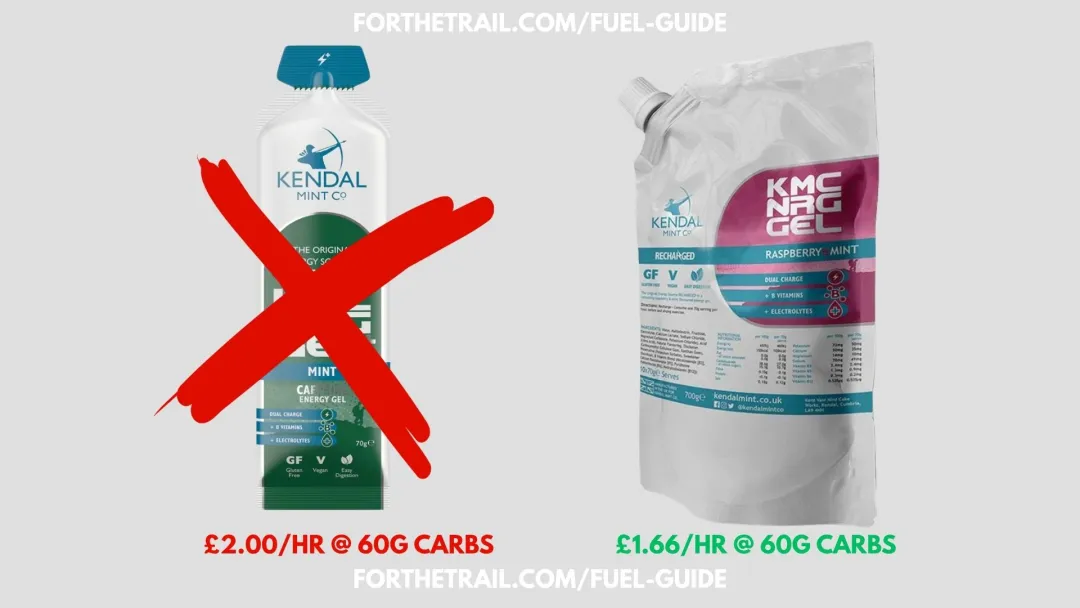
Kendal Mint Co have been offering energy gels in bulk refill packs for a few years now and even have a silicone soft flask they sell with their gels so you can start reusing it straight away and avoid single-use energy gels with their bulk offering.
Let's look in to the price savings and plastic reduction with Kendal Mint Co Refill Energy Gel.
It uses a 2:1 ratio of maltodextrin to fructose so you have the potential to hit upwards of 90g of carbs per hour with this energy gel and it's one of the cheapest from a nutritional brand in this guide.
By transitioning from individual 70g Kendal Mint Co gel packets to their 10-serving bulk refill option which you can see above, you drop your cost per serving from £1.80 down to just £1.50, achieving a solid 17% reduction in your fueling overhead.
While relying on single-serve gels costs you £2.00 per hour to hit a 60g carbohydrate target, the exact same high-performance formula from a bulk pouch delivers that energy for only £1.66 per hour. This isn't the biggest savings compared to the other energy gels in this list that offer bulk and refill options. However, they are already one of the cheapest energy gels you can buy on the market to fuel with per hour so the savings are going to be smaller.
This shift brings your price per 100g of carbohydrates down from £3.33 to just £2.78, effectively saving you £0.55 for every 100g of fuel you squeeze into your flask if you're aiming to hit closer to 120g of carbs per hour.
The financial impact isn't that big of a change, but that is because it's already one of the cheapest energy gels you can have. For an athlete fueling 5 hours per week at a 60g/hour rate, your weekly cost drops from £10.00 to just £8.30, putting £1.70 back in your pocket every single week. This simple bulk purchase generates annual savings of nearly £90 while preventing the waste of 260 multi-layered laminated plastic packets per year by utilising a reusable DirtBag or soft flask system.
Same KMC gel, 17% cheaper in bulk - £88 saved and 260 fewer packets in landfill.
Buy DirtBags to decant Kendal Mint Co Gel Refill in to for precise servings and carb control.
Buy Soft Flasks to decant Kendal Mint Co Gel Refill in to and fuel your runs from a reusable option.
Mulebar Energy Gel Refill Bottle
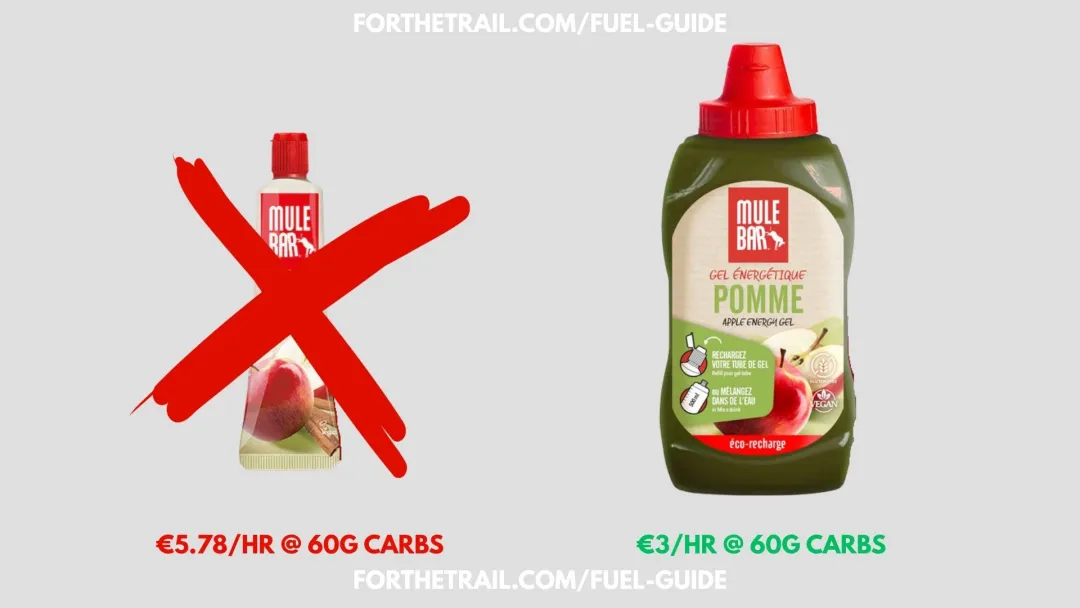
This energy gel company sell similar refill bottles to High5 and Hammer Nutrition, if you haven't heard of them, they are a European nutritional brand that have been going many years.
If you're interested in fuelling more than 60g of carbs per hour, it could be possible with the MuleBar energy gels as they are a mix of brown rice syrup and agave syrup as their main ingredients, meaning they have both glucose and fructose in the gel. The issue is that the ratio of ingredients or the sugar types aren't revealed so we don't know exactly.
By transitioning from individual 37g MuleBar servingss to their 12-serving bulk bottle option, you drop your cost per serving from €2.60 down to just €1.67, achieving a massive 36% reduction in your fueling spend. While relying on single-serve gels costs you €5.78 per hour to hit a 60g carbohydrate target, the exact same high-performance formula from the bottle delivers that energy for only €3.00 per hour.
This shift brings your price per 100g of carbohydrates down from €9.63 to just €6.17, effectively saving you €3.46 for every 100g of fuel you squeeze into your flask.
For a runner fueling 5 hours per week at a 60g/hour rate, your weekly cost drops from €28.90 to just €15.00, putting €13.90 back in your pocket every single week. This simple bulk purchase generates annual savings of over €720 while preventing the waste of 520 multi-layered laminated plastic packets per year by utilising a reusable DirtBag or soft flask system.
MuleBar bulk gels: 36% cheaper, €723 saved, 520 fewer packets in the bin.
Buy DirtBags to decant MuleBar Gel Recharge in to for precise servings and carb control.
Buy Soft Flasks to decant MuleBar Gel Recharge in to and fuel your runs from a reusable option.
Untapped Maple Syrup Energy Gels in Bulk
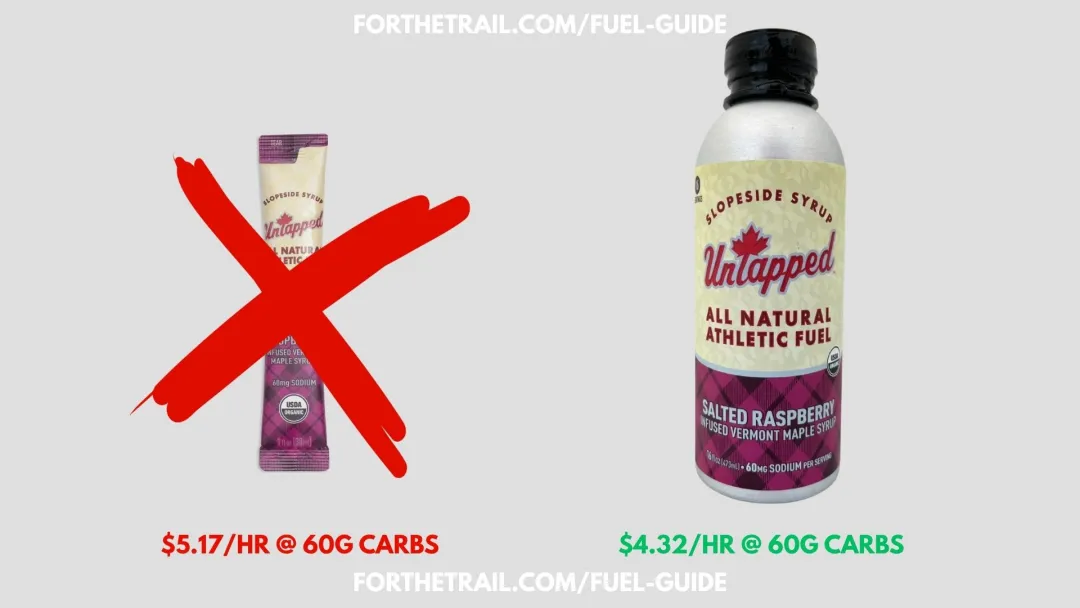
If you love maple syrup and fancy a flavoured option, you can always look in to UnTapped Maple Syrup energy gels as they offer a bulk refillable aluminium bottle that comes with 16 servings in it which is commonly recycled and will save you from throwing 16 packets of single-use energy gels in to the bin after they've been used.
Maple syrup has a ratio of 1:1 for glucose to fructose which means that with this fuel source you could potentially aim for upwards of 120g of carbs per hour.
With UnTapped maple syrup gels you get of carbohydrates per of syrup which means it's great for fuelling on.
When buying individual gels, the cost is per of carbohydrates, whereas the bulk bottle reduces that price to approximately per of carbohydrates.
To hit a target fueling rate of of carbohydrates per hour, individual gel packets would cost you per hour, while using the bulk bottle brings that hourly cost down to roughly .
If you fuel for 5 hours per week for an entire year at this rate, switching to bulk would prevent exactly 600 single-use plastic gel wrappers from going in to landfill, replacing them with just under 38 recyclable bulk bottles that you can reuse or recycle.
Financially, this switch to bulk for a year of consistent training results in an annual saving of approximately compared to purchasing the equivalent energy in single-serve packets.
Decant the bulk UnTapped energy gel in to a silicone soft flask for a multi-hour fuelling plan or portion a single serving in to a Small DirtBag which replicates the convenience of a gel packet without the waste.
Save over $220 per year by choosing the bulk refill bottle by UnTapped
Buy DirtBags to decant UnTapped Maple Gel Bottle in to for precise servings and carb control.
Buy Soft Flasks to decant UnTapped Maple Gel Bottle in to and fuel your runs from a reusable option.
Home-Made Energy Gels
If gels are your thing but you want to save some money and stop binning single-use plastic gel packets, here we'll go through a few home-made gel recipes.
Recreating Expensive Energy Gels At Home For Cheaper
If you are used to consuming expensive energy gels for your training runs and races and still want to stick with them, there is an alternative approach you could use that can save you a lot of money. It's as simple as sticking to the energy gels you know and love on race day, if they work for you, don't change anything, especially if it's taken you a long time to find a winning recipe in your fuelling.
However, for training, you can recreate similar energy gels, it's often much cheaper to do this and doesn't take too long and with reusable DirtBags or using reusable silicone soft flasks or reusable baby food pouches you still get the convenience and ease of use without the waste of single-serve and single-use gel options.
Using Maltodextrin Powder To Make Your Own Energy Gels
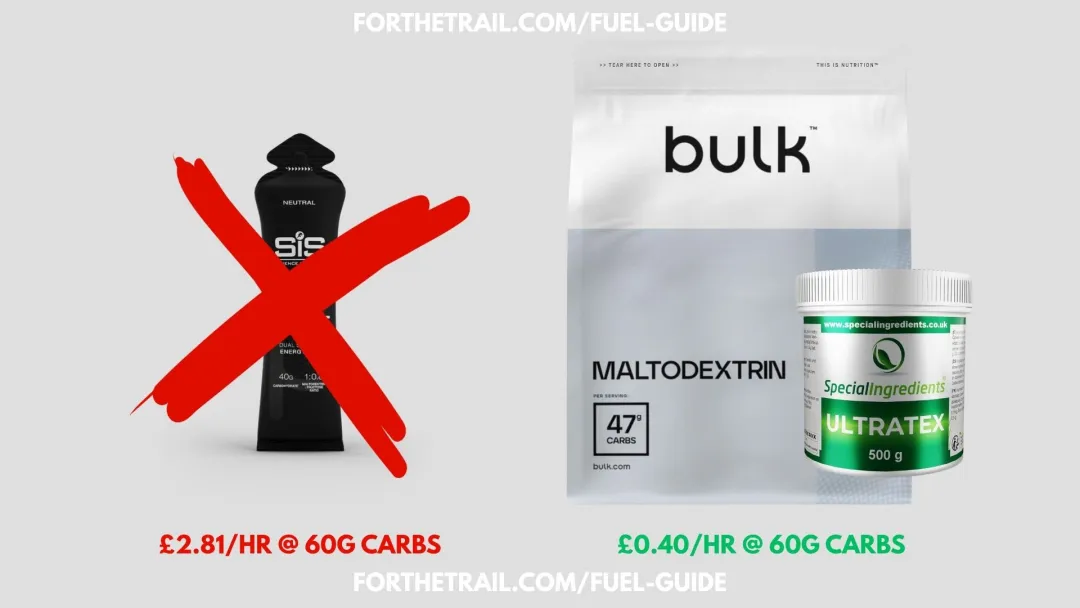
There are so many energy gels using maltodextrin as their main ingredient, actually, the vast majority of energy gels on the market use maltodextrin as their fuel source, add a little thickener and flavouring, sometimes sodium and thats literally it.
It can be as simple as that, maltodextrin and a thickener and you're good to go.
From our partner site, FindTrail and it's fuelling database, you can see a list of all energy gels on the market that use maltodextrin as their main ingredient.
Here are just a few of the more well known and bigger brands that use maltodextrin in their gels;
- Science in Sport
- Mountain Fuel
- Gu
- Enervit
- 226ers
- Cranksports
- Bix
- Applied Nutrition
- Torq
- Carbsfuel
- Lucozade Sport
- OTE
- Precision Hydration
- Kendal Mint Co
- Styrkr
- Etixx
- Never Second
- Hammer Nutrition
There are some very subtle differences between all of the above energy gels, others add other carb types like fructose, each gel uses different thickeners, some use sodium some don't, some have flavouring, some don't and their prices fluctuate massively between £2 to £8 per hour but they all have maltodextrin as their main fuel source and they're nearly all packaged in single-use multi-laminated plastic packets that end up in the bin after every single time.
Home Made Energy Gel in Reusable Carry System
Make your own gel at home for £0.20 per serving (30g of carbs) using just maltodextrin (glucose) and gelling agents (thickeners). Portion it into a reusable Small DirtBag, use it, wash it and use it again or even use a reusable silicone soft flask to put a handful of servings in to one container.
If you did this, it would cost as little as £0.40 per hour (60g of carbs) instead of £2-£6 depending on what gels you were previously using.
You just saved £1000+ (depending on which gel you swap out for bulk home-made version) and eliminated over 500 plastic gel packets from landfill in one year, just by making your own gels and using reusable DirtBags or silicone soft flasks to carry them in as part of your fuelling and nutritional plan.
There are other upsides too, you can customise everything: adjust the thickness to your preference, add fructose to up your potential carb in take from 60g to 120g per hour, add natural flavourings like orange or berry, add caffeine for race day, dialling in your nutrition exactly how you need it, something you can't do with pre-packaged gels and you can test and experiment even more because it costs you far less.
How To Make Your Own Maltodextrin Based Energy Gel
As mentioned above, it's as simple as a sugar and thickener to make a home-made energy gel, but what thickener.
Often pectin is used as a thickener and is a thickener i've used successfully over the years, but there is a downside, it needs heating to activate it, this doesn't take long, but there are easier alternatives.
Using an instant thickener starch like Ultratex is a much easier way to make your own energy gels because it requires no boiling or cooking. You can create your own smooth gels instantly just by stirring or blending the ingredients together.
This recipe creates a 250ml professional-grade gel that is thick enough to be satisfying but thin enough to squeeze effortlessly during a race and by using the instant starch thickener you can do this without cooking or heating anything up.
Ingredients List
Maltodextrin: 150g (The energy source) - Buy @ Amazon
Ultratex (Instant Maize Starch): 5g (The thickener) - Buy @ Amazon
Water: 100ml (The base)
Sea Salt: 1/2 tsp (Essential electrolytes)
Optional: 1 tbsp maple syrup, fruit juice, orange peel, ginger powder, coffee, etc for flavouring
Maltodextrin Energy Gel Recipe (Prep in 2 Minutes)
In a clean bowl, whisk the Maltodextrin, Instant Starch Thickener together until thoroughly combined.
Pour the 100ml of water into a measuring jug.
Pour your dry powder mix into the water, then add any of your extras (flavouring, salt, caffeine, etc) while whisking vigorously with a whisk or a small hand-blender.
As you whisk, the starch will hydrate instantly, turning the water into a smooth, stable gel. If it's too thick, add a teaspoon of water at a time until you reach your perfect consistency
Pour directly into your 250ml soft flask or a large bottle you can keep in the fridge to use to decant from in to a soft flask or Small DirtBag when you need to use it
You want to stick to around 5% of liquid for your instant starch thickener, here in the UK we have Ultratex from a company called Special Ingredients who I use to buy my food additions from like pectin, agar agar, etc.
It is better to start with less instant thickener and add more to make the thickness to your liking. This is because it's as simple as just adding 1g more at a time if your thickness is not to your liking, just wait a bit between adding extra as it takes a few minutes to get to its final thickness and viscosity.
I'd use instant thickener which doesn't require heating if I was on the road, otherwise, at home I might use pectin as the thickener and here I would use much less, requiring less than 1% of pectin to water/liquid weight to get a similar thickness to that of the instant starch thickener like Ultratex.
Buy DirtBags to decant home-made energy gels in to for precise servings and carb control.
Buy Soft Flasks to decant home-made energy gels in to and fuel your runs from a reusable option.
We Need Your Support
If we have helped you save money on your fuelling it would mean a lot if you could donate a small amount. Every little helps us create more guides like this which makes trail running, ultra marathons and endurance more accessible and affordable for all.
Recreating Energy Gels With Brown Rice Syrup
After maltodextrin, one of the next popular ingredients used in energy gels sold by nutritional brands is brown rice syrup. From our database of energy gels you can see in the filter main ingredient that after maltodextrin and glucose is brown rice syrup.
Here are just some of the more popular nutritional brand energy gels that use this ingredient that help you fuel your adventures.
- Active Root
- BPN
- MuleBar
- Huma
- Beet It
- 32Gi
- Lecka
- Veloforte
So why not just buy brown rice syrup in bulk, in a bottle or similar that can be recycled and make your own energy gels?
You can buy brown rice syrup in bulk for around £12 per kg at supermarkets or online. Most brown rice syrup gels only have 2-4 ingredients total, making them incredibly simple to recreate at home for a fraction of the cost.
Example: MuleBar Energy Gel
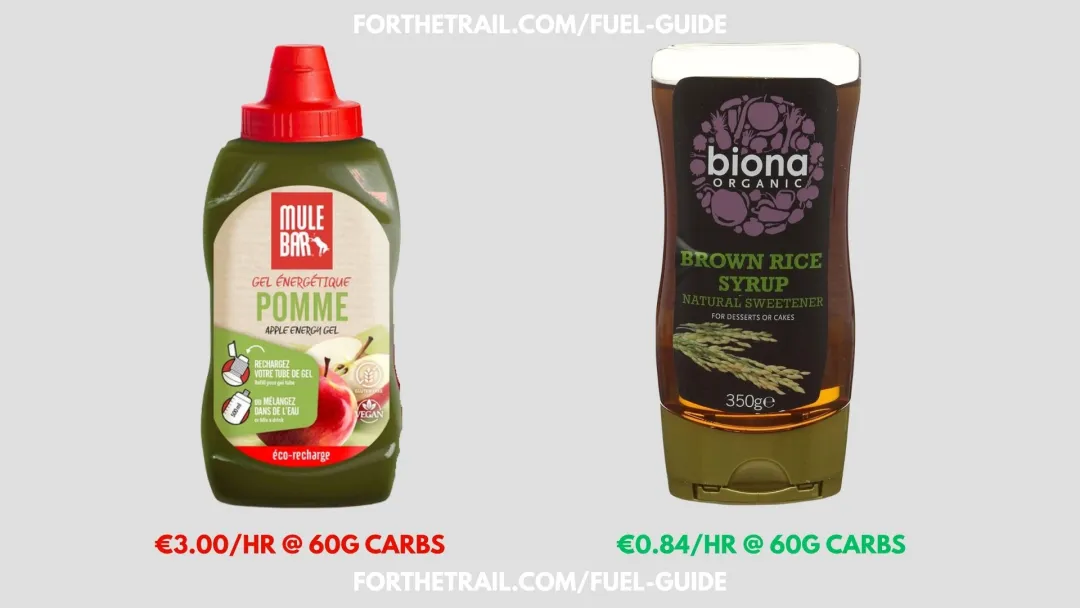
MuleBar's four ingredients:
- Brown Rice Syrup - Buy @ Amazon
- Agave Syrup - Buy @ Amazon
- Himalayan Pink Salt - Buy @ Amazon
- Flavouring
That's it, four ingredients you can buy easily online or at your local supermarket.
By replicating MuleBar’s and other energy gels based on brown rice syrup at home with a 2:1 ratio of Brown Rice Syrup to Agave Syrup, you drop your cost per 27g carbohydrate serving from €1.67 (for the price of MuleBar and similar energy gels) down to just €0.38.
Pre-packaged bulk gels from nutritional brands costs you €3.00 per hour to hit a 60g carbohydrate target, this homemade version delivers the exact same carbs for only €0.84 per hour.
This home-made recipe brings your price per 100g of carbohydrates down from €6.17 to a staggering €1.41, effectively saving you €4.76 for every 100g of fuel you decant into your flask.
If you are fueling for 5 hours per week at a 60g of carbs per hour, your weekly cost plummets from €15.00 to just €4.20. Add to this the annual savings of €562 if you swap out a bulk fuel option like the MuleBar gel for this home-made version.
If you're swapping out a single serve gel from BPN, Mulebar, Huma and Veloforte for this DIY option, you'll have even bigger savings of €4.94 per hour, which is €24.70 in savings every single week and an insane annual saving of €1284.
Make brown rice syrup gels at home: 77% cheaper than bulk gel options, €562 saved yearly, identical ingredients. Or swap out single-serve gel packets with brown rice syrup with home-made version and save €1284 per year!
Once you've made your own gel at home, simply decant in to a large bottle that you can store your home-made energy gel mix in and then use to decant in to silicone soft flasks, silicone baby food pouches or Small DirtBags for single serve options without the waste.
Buy DirtBags to decant home-made energy gels in to for precise servings and carb control.
Buy Soft Flasks to decant home-made energy gels in to and fuel your runs from a reusable option.
Fuelling With Maple Syrup
Maple syrup is pure liquid carbohydrate (67g per 100g) with a natural blend of sucrose and trace minerals, making it an effective whole-food fuel and natural energy gel that's been used by endurance athletes for decades. At around £10-£15 per litre, it costs roughly £1.30-£1.50 per hour for 60g of carbs. This makes it significantly cheaper than commercial gels, but not as cheap as making your own and provides quick energy in an easily digestible format that can be carried in soft flasks or Small DirtBags.
What we love about maple syrup is that you can buy this anywhere in the world and it's something i've always fallen back on and taken a flask or two with me for an ultramarathon. I even fuelled with this as my main fuel source during my UTMB CCC race a few years ago, sipping on it every 20-30 minutes. I simply filled up two 500ml soft flasks from maple syrup that I bought in Chamonix from a small supermarket, thats why it's so good to train with and use, because you can buy it anywhere.
As we mentioned further up with the Untapped Maple Syrup gels, you can fuel upwards of 120g of carbs with maple syrup due to its 1:1 ratio of glucose to fructose.
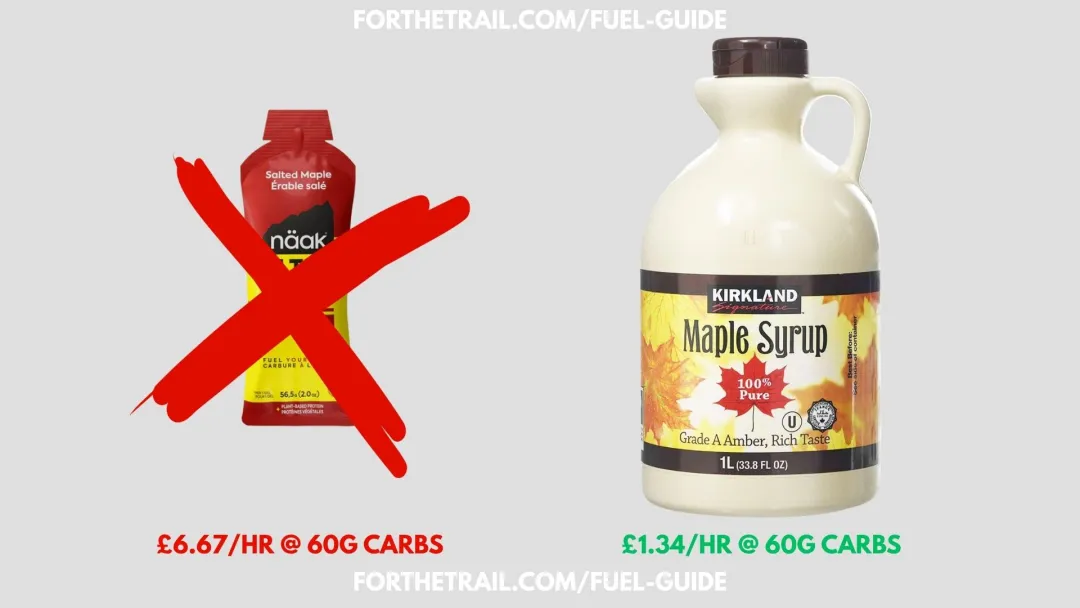
Below we compare bulk bought maple syrup with the Naak Maple Syrup Gel, which does cost considerably more, however we'd like to add that it does include other ingredients and they do add maltodextrin in to it aswell which will obviously increase its price compared to just maple syrup by itself.
That brings us to our last point, you are free to change and add anything you want to your maple syrup, orange oil for flavouring, add maltodextrin powder to change the glucose to fructose ratio, add your own salt or flavourings, such as ginger powder and you can experiment and create the perfect cheap energy gel for yourself.
Comparing Maple Syrup to Nutritional Brand Maple Syrup Energy Gel
Switching from high-end Naak Maple Gels to bulk bottles of Kirkland Maple Syrup is one of the most effective ways to slash your endurance budget, as the bulk syrup provides a dense 67g of carbohydrates per 100g which is a great energy source for fuelling.
While a single Naak gel costs £3.00 for just 27g of energy, the bulk maple syrup bottle delivers a massive 45g of carbs for every £1 spent, that's 18g more of carbs per hour for one third of the price. At a standard fueling rate of 60g of carbs per hour, your cost drops from £6.67 to only £1.34 per hour.
If you're aiming for upwards of 120g of carbs per hour, which you can try with maple syrup, this shift brings your price per 100g of carbohydrates down from £11.11 to just £2.24, putting £8.87 back in your pocket for every 100g of fuel you consume on the trail.
The financial impact over a year is staggering, for an athlete training 5 hours a week and fuelling for every hour of that, this simple swap generates annual savings of £1,387 while being 80% cheaper than the brand-name equivalent and removing single-use plastic packets completely from your nutritional plan and replacing it with a recyclable bottle.
Naak charges £3 for maple syrup in a plastic packet. Buy the refill bottle for £15, save £1,387 a year
How To Use Maple Syrup Energy Gels
Simply decant your home-made maple syrup mix in to a large bottle that you can later use to decant in to silicone soft flasks, silicone baby food pouches or Small DirtBags for single serve options without the waste.
If you're just using maple syrup, use a funnel and simply pour it from your bottle in to your soft flask or Small DirtBag, its that simple.
Buy DirtBags to decant Maple Syrup in to for precise servings and carb control.
Buy Soft Flasks to decant Maple Syrup in to and fuel your runs from a reusable option.
Fuelling With Sugar
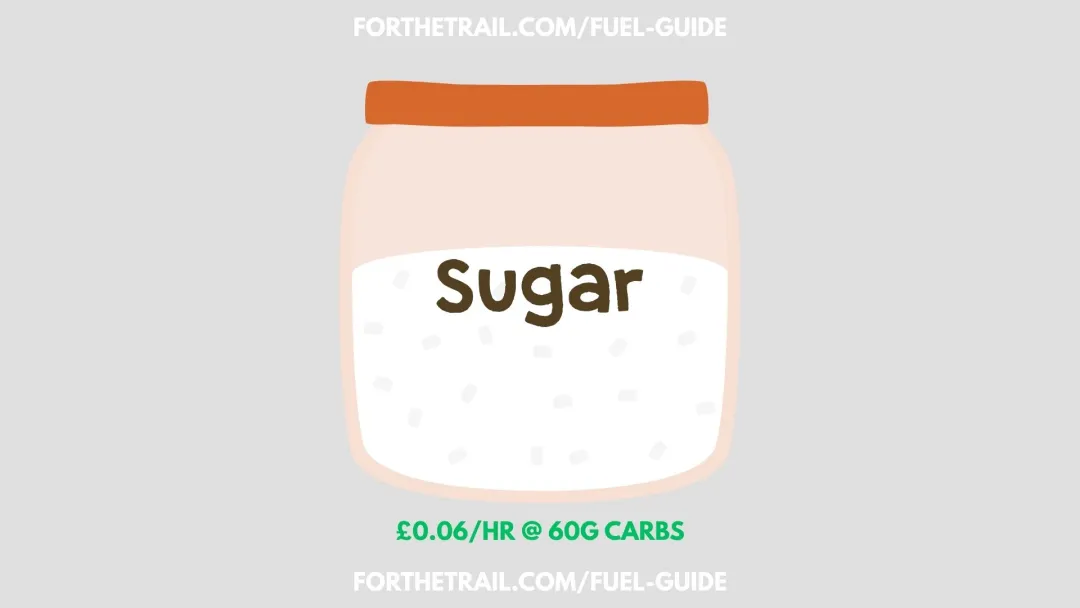
The absolute simplest and cheapest energy gel you can make at home is using sugar, dissolving it in water and then adding any electrolytes, flavouring or thickeners to it, these aren't required but can improve the gel and make it easier to consume.
By dissolving two parts standard white table sugar into one part hot water, you create a high-density syrup that mimics the precise 1:1 glucose-to-fructose ratio found in many elite-tier endurance products.
The only difference here is that you are missing the thickener, such as pectin or starches that are commonly used in gels made by nutritional brands.
From a financial perspective, this method is almost unbeatable, delivering 100g of carbohydrates for approximately £0.10 (based on a standard £1.00/kg bag of granulated sugar). This brings your price per 60g of carbs down to a staggering £0.06, representing a 98% saving compared to the £2.81 you would spend on an equivalent energy gel from a nutritional brand.
If you want to expand on this super basic recipe, you can add sea salt to cover electrolyte loss and add a squeeze of lemon which will cut through the sweetness.
You may have also noticed that this is the exact same ingredients that a lot of nutritional brands use for their energy chew and energy bar recipes. The only difference is that they remove a lot more water and use more thickeners like cornstarch to make chews rather than a gel, so don't be thinking that this isn't a good idea, you're more than likely already paying for something as simple as this.
One extra step is that if you would prefer a thicker energy gel than just sugar dissolved in water, add the instant starch thickener like Ultragel which will give you a thicker and more enjoyable mouth feel. It's as simple as adding it to the dissolved mix and whisking it or blending it in, adding a small amount at a time, this will turn your syrupy liquid in to more of a gel consistency. If you prefer to try pectin, you can also give that a go by simply boiling it on the hob for a few minutes to activate the thickening.
By decanting this mix into reusable silicone soft flasks or Small DirtBags, you aren't just saving £700+ per year, you are completely opting out of the single-use plastic economy that dominates the sports nutrition industry. Instead, you will be purchasing white table sugar that usually comes in paper packaging from your local supermarket, that can later be recycled, which is far better for the environment too.
White sugar energy gels are 98% cheaper than SIS Beta, £734 saved yearly, using the exact 1:1 glucose-to-fructose ratio found in elite racing fuels.
Buy DirtBags to decant home-made energy gels in to for precise servings and carb control.
Buy Soft Flasks to decant home-made energy gels in to and fuel your runs from a reusable option.
Energy Powders
Energy powders are used for fuelling in endurance sports such as trail running and ultra-marathons, you simply add a specific amount you want to cover your energy requirements to water, give it a shake and sip on your bottle, thats it.
One of the biggest issues with energy powders is that they can come in single-serving plastic sachets and packets that end up in landfill and you're often paying much more for this convenience.
We will look in to;
- Where we can buy them in bulk from nutritional brands that are ready made and ready to use
- Where we can buy them in bulk from non nutritional brands and other vendors to make our own energy powder mixes for cheaper
Both of these options will save you money when comparing with single-serve energy powder packets and will also drastically reduce the waste that is created from those single-use packets.
Bulk Bought Energy Powder From Nutritional Brands
You have the options to buy in bulk or as single serving options from nutritional brands, it is always better to buy in bulk or make your own at home because it will save you money and reduce waste that goes in to landfill.
This is where DirtBags come in, you can now buy the bulk options of energy powders from nutritional brands and decant them in to Small DirtBags which will hold upwards of 45g of carbs (depending on energy powder used) in each bag. Thus replacing the single-serve sachets that nutritional brands sell and you get the exact same convenience of having them in a serving that you know the size of, but in a reusable DirtBag.
In the bulk offerings from brands, we will introduce you to only two popular energy powder companies because nearly every single nutritional brand offers a bulk version of their single-use and single serve packet options.
Before we do though, we'd like to highlight that Maurten and a few other brands, not that many, but a few, still only offer energy powders and their energy products and fuels in single-serving and single-use packaging, which we think is atrocious. Not only that, but Maurten are an official brand partner of the International Trail Running Association (ITRA), which I find ludicrous, that the actual trail running association of the world happily accepts money from one of the biggest waste creators in all of trail running and then actively promotes them.
This is just one of the many reasons why I created DirtBags and have written this in-depth guide to fuelling more sustainably, because of the amount of hypocrisy in our sport and hobby of trail running, that is based on nature.
Tailwind Endurance Energy Powder in Bulk
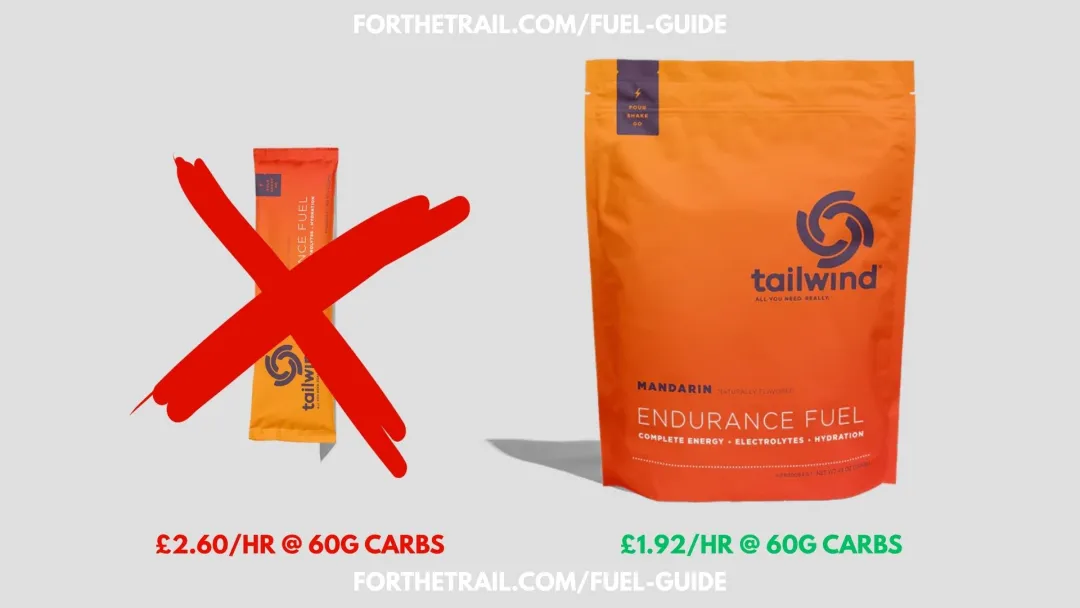
On the other hand, Tailwind who are very well known in trail and ultra running, do sell single-use powder packets, also sell their powders in bulk bags, massively reducing waste but also reducing their costs too.
By opting for the 50-serving bulk bag over the convenience of single-stick packs, you slash your cost per serving from £1.08 down to just £0.80. This shift brings your price per 100g of carbohydrates down from £4.33 to £3.20, putting £1.13 back in your pocket for every 100g of fuel you mix, which is great to see if you're aiming for more carbs per hour and it's the exact same energy powder.
The financial impact over a year is not to be sniffed at, at a standard fueling rate of 60g of carbs per hour, your hourly cost drops from £2.60 to £1.92. For an athlete training 5 hours a week, this simple bulk purchase generates annual savings of over £176 while preventing the waste of 520 individual plastic sachets per year.
All you have to do is decant your bulk bought Tailwind Endurance Fuel in to a Small DirtBag to get the exact same convenience as a single sachet. Carry however many you need on you, upwards of 10 Small DirtBags for a 5 hour run and decant them in to your silicone soft flask when you need to, as simple as that and you've saved money, moved to a reusable carry system with DirtBags and reduced your plastic waste you put in to landfill.
The Tailwind Bulk Option: Save £478 per year by switching from single-serve sticks to bulk powder, achieving a 36% reduction in your fueling costs for the exact same ingredients and energy powder.
Buy DirtBags to decant Tailwind Endurance Powder in to for precise servings and carb control.
High5 Energy Powder in Bulk
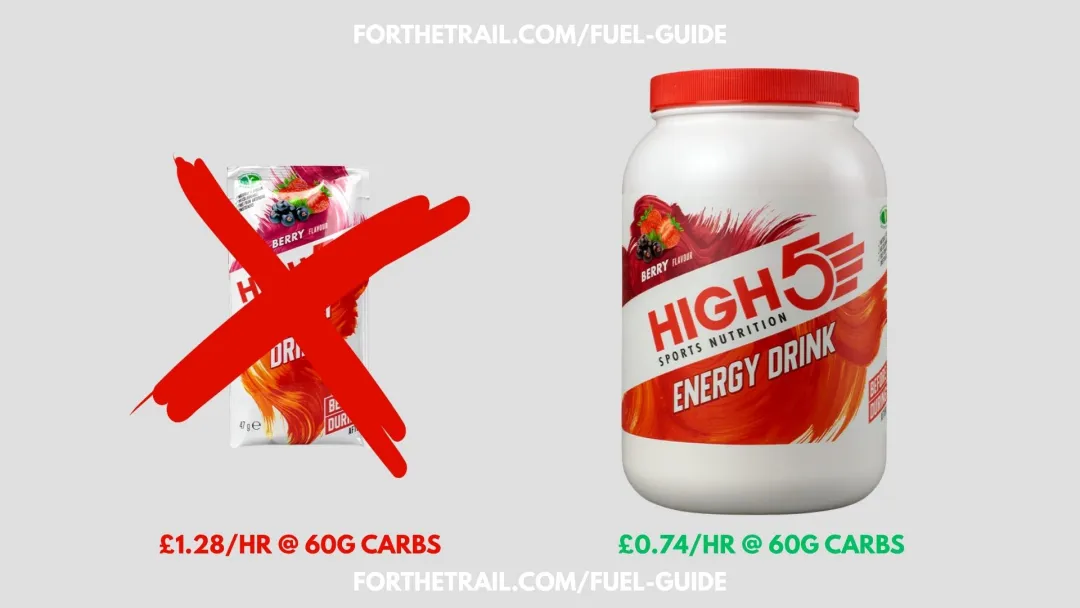
High5 are another energy powder company here in the UK but can also be bought in other parts of the world, they have one of the cheapest energy powders on the market that are ready made and ready to use for your convenience.
At our partner site FindTrail.co, we have filtered to show the cheapest energy powders you can buy in bulk and then sorted the database to show those that are cheapest at the top and the High5 energy powders in bulk offerings come up the cheapest.
The High5 energy powders have a glucose to fructose ratio of 2:1 which means that you can fuel upwards of 90g of carbs per hour with this energy powder.
By transitioning from single-serve sachets to a bulk 2.2kg tub, you drop your cost per serving from £0.94 down to just £0.54, achieving a massive reduction in your overhead for the exact same ingredients. While relying on individual packets costs you £1.28 for every 60g of carbohydrates, the exact same powder from a bulk tub delivers that energy for only £0.74, proving that you are literally paying for convenience.
This shift brings your price per 100g of carbohydrates down from £2.13 to just £1.23, effectively saving you £0.90 for every 100g of fuel you consume.
Fueling 5 hours per week at a 60g/hour rate, your annual spend drops from £333 to just £192. Beyond the £141 in yearly savings, you are preventing over 350 non-recyclable plastic sachets from entering the landfill by utilising a reusable Small DirtBag or flask system.
Even with one of the UK’s most budget-friendly brands, moving to bulk demonstrates that you can fuel professional-level efforts for less than the price of a daily coffee.
You can save upwards £141 per year by swapping single-serve High5 energy powder for their bulk tub.
Buy DirtBags to decant High5 Energy Powder in to for precise servings and carb control.
Making Your Own Energy Powders
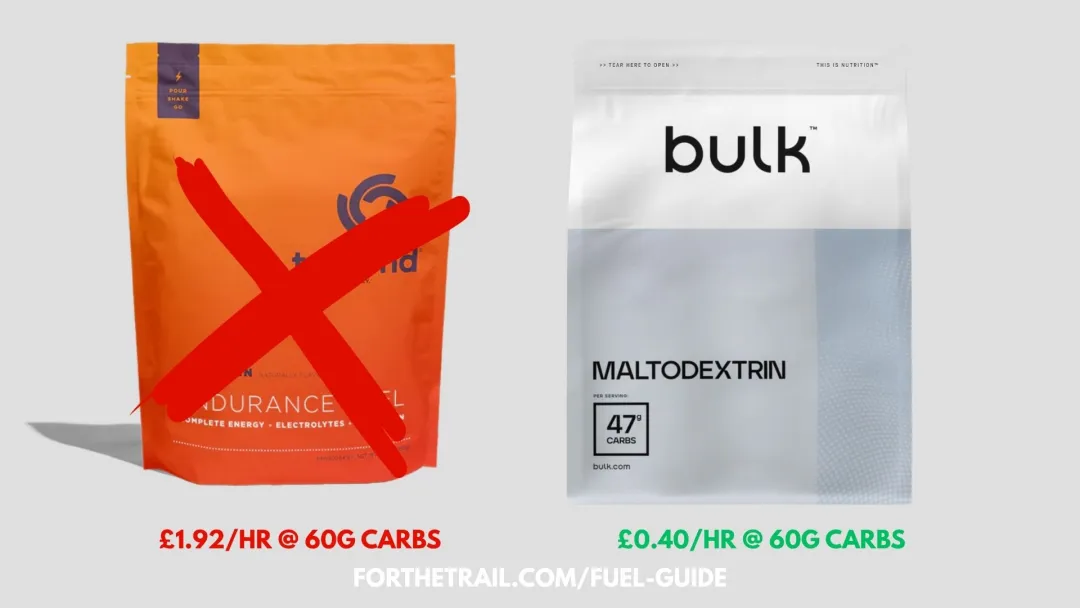
Making your own energy powder at home can be super super simple. Buy maltodextrin in bulk, fructose in bulk, sodium citrate, mix together in a large tub and decant what you need in to Small DirtBags and your soft flasks for when you need fuelling.
All you need is:
- Maltodextrin - Buy @ Amazon
- Fructose - Buy @ Amazon
- Sodium citrate - Buy @ Amazon
- Flavouring (Ginger Powder) - Buy @ Amazon
There are many different ratios being used by nutritional brands, from 1:0.8 to 2:1 of maltodextrin (glucose) to fructose because their are two different pathways for you to absorb and use the energy instantly and they can be hit at the same time, hence the 120g of carbs per hour marketing you often see as they have the potential of 60g of carbs per hour per pathway at the same time.
I did mention that this isn't a nutritional guide and I repeat, i'm not a nutritional expert in sports science. However, I do recommend you aim for 60g of carbs through glucose/maltodextrin per hour and then very slowly and methodically add more and more fructose to your mix over the span of a few months whilst you're training your gut and training with fuel on long runs. This is because you are more likely to get an upset stomach with fructose.
I have also added ginger powder as a flavouring to this home made energy powder recipe above, I have used this on and off over the years and it has been proven to help with stomach and gut issues, so worth giving it a try.
In the above example, we compare Tailwind Endurance Energy Powder in bulk to buying your own maltodextrin and fructose powders and mixing yourself. By taking control of your own ratios, you slash your hourly fueling cost from £1.92 down to just £0.40, putting over £390 back in your pocket every year.
Slash your hourly fueling cost from £1.92 down to just £0.40 per hour, putting over £390 back in your pocket every year by choosing bulk bought maltodextrin and fructose powders
Buy DirtBags to decant home-made energy powders in to for precise servings and carb control.
Fuelling With Bulk Bought Snacks
With other snacks, we look at what you can make at home and what you can buy from most supermarkets in the world which do a very good job of offering what nutritional brand fuel options do.
Think of this section as one in which you can literally walk in to a store or go online and buy snacks that work well in endurance activities and they are pretty much ready to consume as soon as they're in your hands.
A great example of this are chewy sweets, think of Turkish Delight and similar. Once you start looking at nutritional brand energy chews, you start to realise that they're basically just very expensive sweets that contain sugar and are easier to eat and consume.
We will literally list as many other snack ideas as we can to inspire you to check out your local supermarkets and online stores so you can find fuels you enjoy that cost you much less than what you would pay through a nutritional brand.
We look at bulk bought snacks that you can buy that are similar to nutritional brand offerings, these will save you money, reduce plastic packaging and can usually be bought anywhere in the world from a supermarket local to you.
There are literally endless bulk bought snack options, I will try and categorise and highlight as many types as possible.
I have done a number of ultras on nothing but vegan chewy sweets that cost £1 for a huge pack from a local supermarket, with its main ingredient as glucose, they're exactly what I needed. I then complimented this at aid stations with just crisps and other small snacks for sodium replacement and some extra energy beyond the glucose from the sweets.
Watch Out For Fiber on Nutritional Labels
If you are looking in to researching your own fuels you can buy in bulk or make at home yourself, one thing to pay particular attention to is fiber. This is because in some countries around the world, fiber is listed as part of carbohydrates on the nutritional label.
You'll look at it and think thats a really high number for carbs, that should work really well, but fiber might not be your friend for hard endurance efforts.
Fortunately here in the UK, nutritional labels list carbohydrates separately from fiber, so the carbohydrates amount you see is exactly what you will digest and your muscles will use.
If you look at something like dates, they contain roughly 7g of fiber per 100g, on a label that would add 7g to carbohydrates, this is great for overall health, but for big endurance efforts it can slow down sugar absorption and increase the risk of stomach issues and gut distress.
We will go through the following energy snacks that are very similar to nutritional brand energy products below:
- Stoopwafels and caramel waffles which are similar to Naak Energy Wafels
- Vegan chewy sweets that are similar to energy chews
- Fruit like bananas and dates
- Biscuits
- Turkish Delight which are the OG energy chew
Cheaper Alternatives to Energy Bars
Energy bars come in all shapes and sizes now and have diversified in to many different bar types, from puffed rice bars, through to energy waffles and beyond.
Energy Waffles and Stroopwafels
Energy waffles or otherwise known as stroopwafel or caramel waffles here in the UK can be bought for very cheap in multipacks which contain many individual waffles and have just one plastic wrapper that covers all of them.
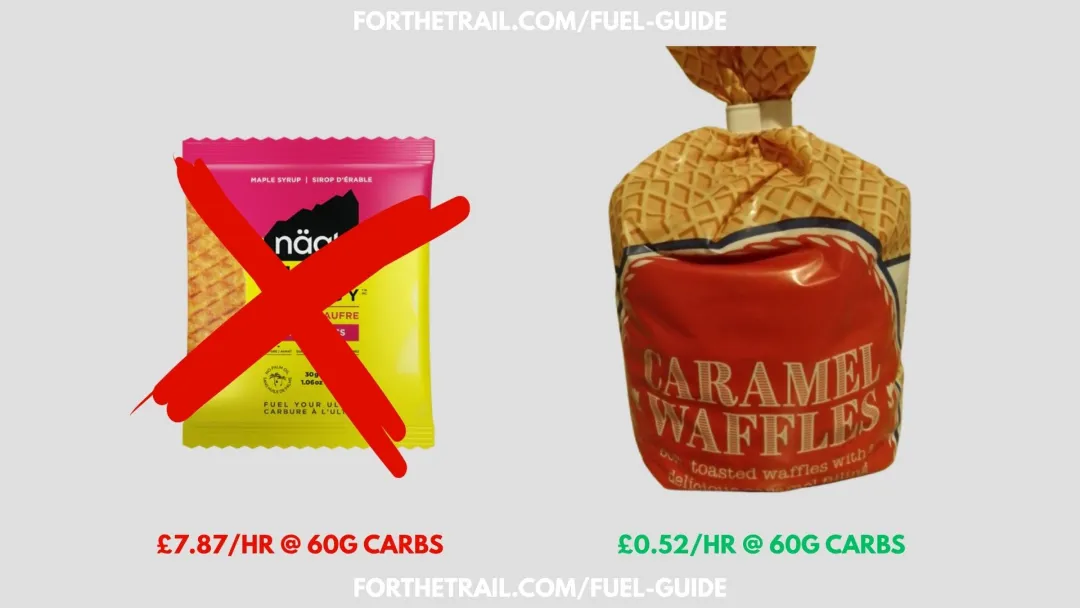
B&M caramel waffles cost just £1.20 for an 8-pack and have a similar glucose and fructose blend as premium Naak waffles which cost £2.25 just for a single waffle. With each 30g waffle providing 18g of carbs, so just portion 3.5 waffles per hour into a Large DirtBag for precise 60g of carbs per hour fuelling.
If we look at the price comparison, it is just £0.52 per hour for the B&M stroopwafels compared to £7.87 per hour for the Naak Energy Waffles. Saving you £1,911per year if you fuelled from just these waffles for 5 hours per week.
They both contain 56g of carbs per 100g, with the B&M Stroopwafels costing £0.93 per 100g carbs and the Naak Energy Waffles costing £14.05 per 100g carbs when you compare buying the 8 pack to the single Naak waffle. This saves you £13.12 for every 100g of carbs you consume with these waffles.
Save money and reduce plastic waste with Stroopwafels: it is just £0.52 per hour for the B&M stroopwafels compared to £7.87 per hour for the Naak Energy Waffles
Buy DirtBags to decant stroopwafels and caramel waffles in to for precise servings and carb control.
Alternatives to Energy Chews
Enjoy energy chews but looking for a cheaper alternative?
Chewy sweets and gummies have very similar textures to energy chews that are sold by nutritional brands. There are however, plenty of other options that we'll go through below of bulk bought chewy sweets, many of which I have had great success fuelling with over the years on ultra-marathons and many a long training run.
Chewy Sweets for Fuelling Ultra-Marathons
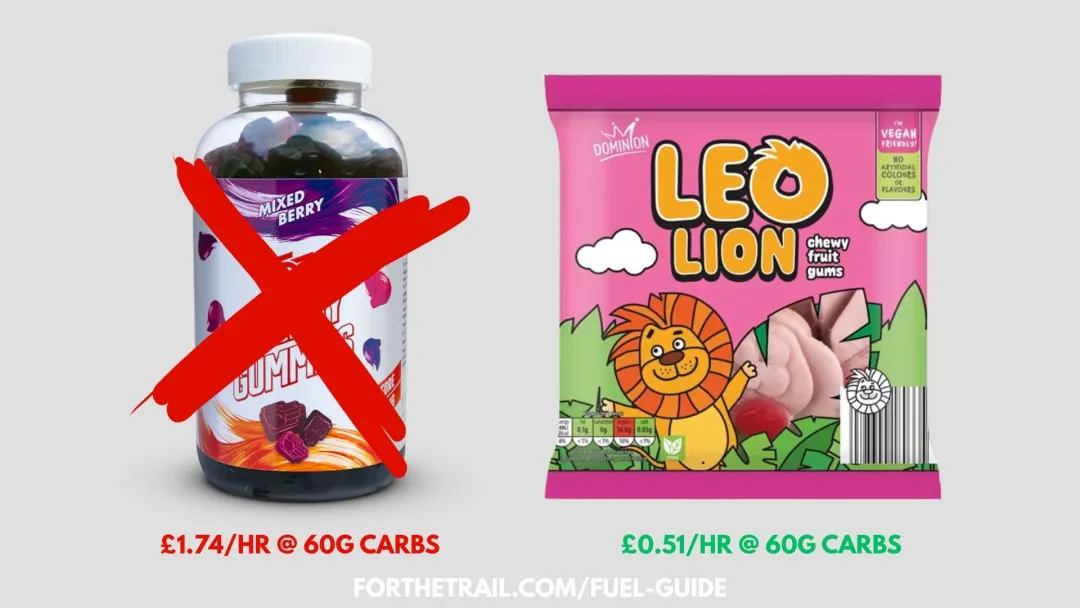
Chewy sweets are something i've regularly fuelled with over the last few years. My favourites are the Aldi and Lidl vegan chewy sweets, like Leo the Lion, Veggie Walter Worms and Henry The Hippo. Packs cost around £1-£1.20 for 7 servings of 3 sweets (21 sweets) and you'll get around 86g of carbs per 100g with their main ingredients as glucose syrup and sugars. This means you can fuel between 60-80g of carbs per hour with this option as they have glucose and a little bit of fructose in them.
One of the main reasons for sharing this type of chewy sweet and gummy is that it's actually very soft, nothing like a wine gum, which are still great for endurance but much easier to get down. Think more of a marshmallow softness, you don't need to chew them that much and they are very easily swallowed within seconds.
By switching from specialised sports gummies to Leo the Lion sweets or similar, you drop your cost per 20.4g carbohydrate serving from roughly £1.20 down to just £0.17, achieving a staggering 85% reduction in your fueling costs. While name-brand endurance chews can cost you £3.50+ per hour to hit a 60g carbohydrate target, these glucose and sugar-based chewy sweets deliver that same energy for only £0.51 per hour.
This shift brings your price per 100g of carbohydrates down to £0.83, making it one of the most cost-effective endurance fuels on the market.
if you are fueling 5 hours per week at a 60g/hour rate, your weekly cost plummets from £17.50 to just £2.55, thats a little over 2 bulk packets per week of chewy sweets, putting nearly £15 back in your pocket every single week.
Simply place a 24g (3 sweets) of the chewy sweets in to a Small DirtBag and you'll have roughly 20g of carbs. Open one up every 20 minutes to eat the chewy sweets and you'll get over 60g of carbs per hour. This will cost you as little as 51p per hour, depending on which vegan chewy sweets you choose.
Save £777+ per year and swap energy chews for these vegan-friendly gummies that you can buy in supermarkets
Buy DirtBags to decant supermarket chewy vegan sweets in to for precise servings and carb control.
Fuelling With Turkish Delight The Original Energy Chew
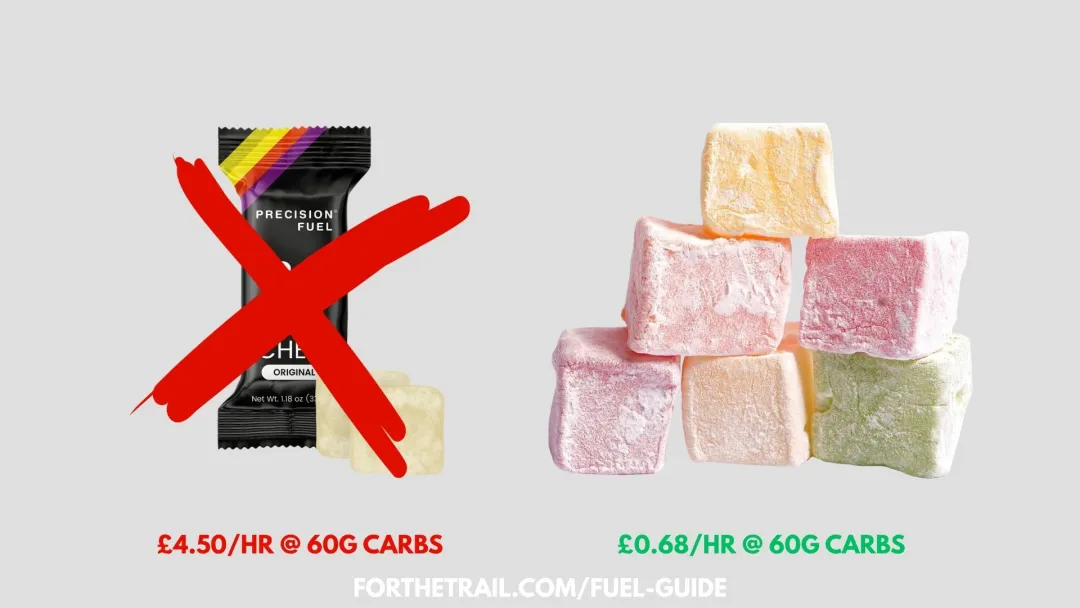
Do you know what else shares this exact ingredient profile and actually looks identical to most energy chews you see from nutritional brands in the endurance space? Turkish Delight.
Just take a look at the ingredients comparison below, we compare the Precision Hydration PF30 Energy Chews with the ingredients used for Turkish Delight.
Nutritional Brand Energy Chew Ingredients: Sugar, Corn Starch, Water, Citric Acid, Natural Flavours, Natural Colours
Turkish Delight Bought Online or In Store: Sugar, Maize Starch, Water, Icing Sugar, Natural Flavour Natural Colouring, Citric Acid.
This is the ingredients list comparison between one of the most expensive energy chews on the market and just a regular large bag of turkish delight you can buy in most supermarkets or online for just a fraction of the price.
Buying turkish delight in bulk costs just a few pence more per hour than making your own energy chews, yet you get the convenience of the exact same energy chew nutritional brands sell but in a bulk bag, rather than individual serving plastic wrappers and it's almost 10x cheaper.
If you are looking for specific flavours of turkish delight, this UK company Dorri make them here, so you have even more choice of flavours by going the lokum or turkish delight route.
You're paying so much more for sports branding for the exact same ingredients, and to top it off, you're getting it in single-serve single-use plastic packaging that ends up in landfill.
At approximately £8.50 per kg when bought in bulk (e.g., £17 for 2kg), Turkish Delight is functionally identical to high-end endurance products like Precision Fuel PF30 chews, which can cost over £40 per kg. While those chews cost you £4.40 per hour to hit a 60g carbohydrate target, Turkish Delight delivers that same high-density fuel for just £0.68 per hour.
Because the main ingredient is sugar, this has a 1:1 ratio of glucose to fructose so you can aim upwards of 120g of carbs with Turkish Delight, otherwise known as lokum.
This shift in purchase brings your price per 100g of carbohydrates down from £7.33 to just £0.97, effectively saving you over £6.00 for every 100g of carbs you consume.
The financial impact is staggering if you are fuelling 5 hours per week at 60g/hr, your annual spend drops from £1,144 to just £151, putting nearly £1,000 back in your pocket.
To hit a precise 60g carbohydrate-per-hour target (at 88g carbs per 100g), you simply need to weigh out 68g of Turkish Delight. Split this into two Small DirtBags (34g each) to consume every 30 minutes for a perfect, steady energy flow. You also get much more choice in terms of flavouring with turkish delight, like mango, apple, banana and many others, which is another great reason to go this route.
Turkish Delight, the original energy chew: Save £1,000+ per year by switching from nutritional brand energy chews to bulk bought Turkish Delight, the exact same ingredients for a fraction of the cost.
Buy DirtBags to decant turkish delight in to for precise servings and carb control and replicate the PF30 energy chews for a fraction of the price.
Fuelling With Biscuits and Fig Rolls
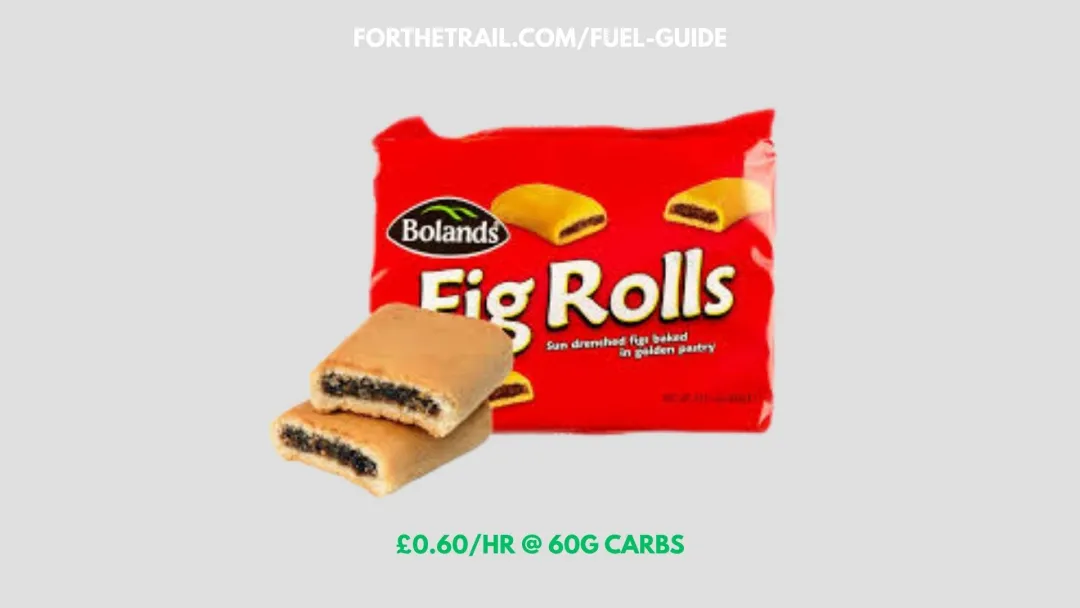
Fig rolls are one of my all time favourite biscuit, slightly sweet, chewy and soft biscuit with a good amount of carbohydrates, they've been on many an adventure with me.
They offer the perfect balance of immediate energy and long-term satisfaction without the mess of a gel and can be bought in pretty much any supermarket in the UK.
You get 25g of carbohydrates in 2 biscuits which total 34g in weight, simply put three in to a Small DirtBag and you'll have 37g of carbs serving to take every 30 minutes which will cover you for a 60g of carbs per hour nutritional plan.
It's main ingredients are wheat, figs, glucose syrup and sugar so you're getting a small bit of fruit which provides a natural sweetness and dual source sugars which will act quickly and keep your energy topped up.
At just £1.65 for a pack of 12 biscuits that works out at approximately £0.27 per 25g carb serving, they are significantly cheaper than most commercial energy snacks.
They are perfect for DirtBags because they hold up well in a jersey pocket, even in warmer weather, and provide a satisfying chew that helps break up the monotony of gel or liquid-only fueling. So always a good backup to have to gels and chews that you might enjoy.
For a cost of roughly £1.10 per 100g of carbs, Bolands Fig Rolls are one of the most cost-effective and palatable ways to fuel an endurance effort.
Save £300+ per year and ditch the sticky gel packets by switching to Bolands Fig Rolls, that costs just £1.10 per 100g of carbs.
Buy DirtBags to decant fig rolls and other biscuits in to for precise servings and carb control.
Fuelling With Fruit
Fruit can be found almost anywhere in the world to buy and it's as simple as walking in to a supermarket, store or online website to buy them and they'll be ready to consume whenever you need them. We'll go through a few of them here below and how they can work in your nutritional plan.
One of the great things about some of the fruits here is that they have their own packaging which makes them more sustainable than any gels or endurance fuel you can buy from nutritional brands. This isn't the case for all fruits, some you will have to package and that is where DirtBags will come in.
Bananas for Endurance
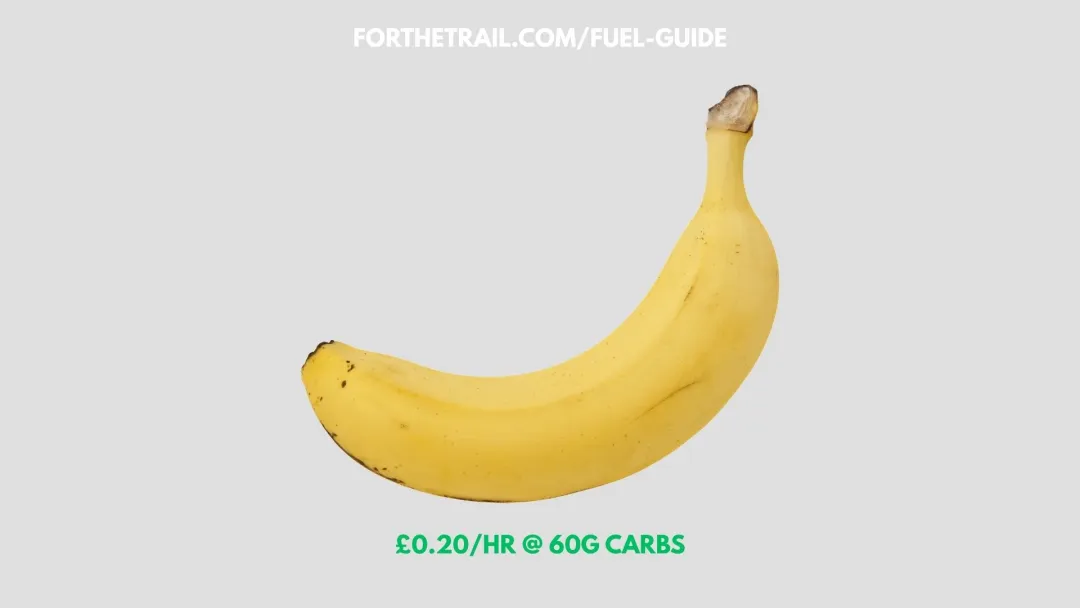
Saturday Fit have a great introduction video on the banana for endurance fuelling here.
Bananas are one of the cheapest whole food fuels and can be bought absolutely anywhere in the world. At roughly £1/kg, they cost just £0.15-0.20 per hour for 60g of carbs which is roughly 2-3 medium bananas, compared to £3-6/hour for commercial gels.
Each medium banana contains roughly 25g of carbs plus 400mg of potassium for electrolyte replacement. You don't need to put bananas in any form of packaging, as their skin is a natural packaging, however, I do recommend putting your finished banana skin in to a Large DirtBag so that it keeps the rest of your kit clean, eliminating plastic packets entirely while saving over 95% on fuelling costs, and the peels are fully compostable too, whats not to love.
Something you couldn't do with a silicone soft flask, showing how versatile DirtBags are for endurance sports, fuelling and carrying your gear.
Dates
Dates are an absolutely phenomenal fuel source for endurance activities, especially trail and ultra marathons. They're small, chewy, tasty, healthy for you and full of carbs.
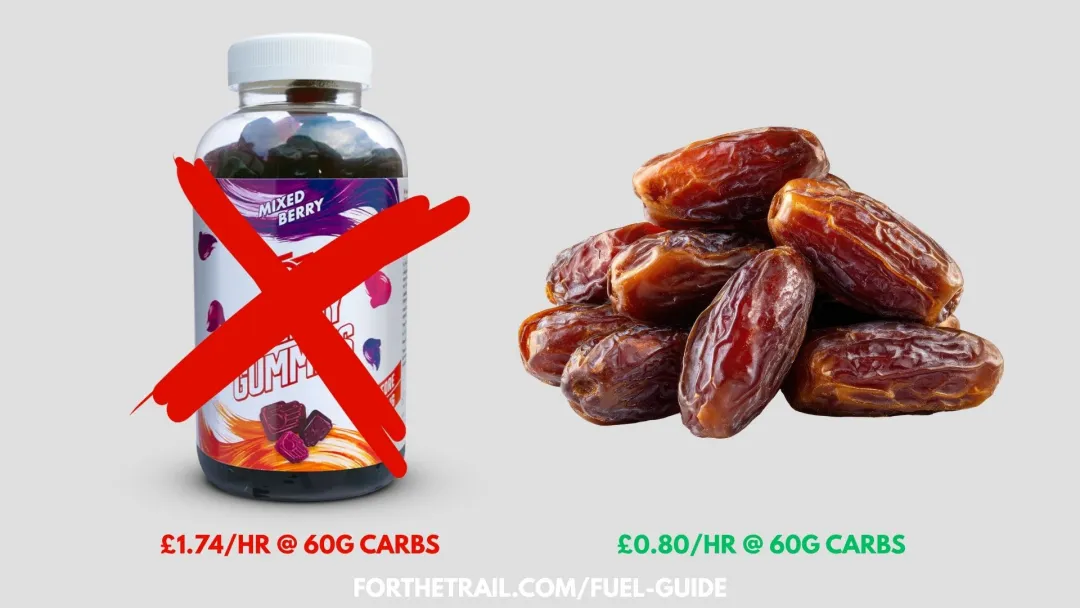
They're basically nature's energy chew, costing about £10/kg, this works out at just £0.80-1.00 per hour for 60g of carbs (3-4 dates), compared to £3-6/hour for commercial chews. Each date contains 16-18g of naturally occurring glucose and fructose in a whole food package with potassium for electrolytes.
You just simply portion 3-4 dates into a reusable Small DirtBag, just make sure to weigh them so that you get the required amount of carbs for each serving you want. Then open up each Small Dirtbag ever 20-30 minutes, depending on your nutritional plan to fuel from, just like you would with a single-use energy chew packet when you wanted to fuel.
Using dates as a fuel source will eliminate plastic chew packets entirely while saving 80-85% on fuel costs.
A final tip for fuelling with dates is that if you have really sticky dates or it's warm for your adventure, this will add to its stickiness, I use desiccated coconut which you can buy here. It's as simple as pouring some in to a bowl, placing your dates in them and tossing them for a few seconds and then putting them in to your Small DirtBags. You can also use cornstarch or icing sugar which will do the same job too which is often used on energy chews.
Buy DirtBags to decant pitted dates in to for precise servings and carb control, don't forget to sprinkle in some desiccated coconut or cornstarch.
Fuelling With Home Made Real Foods
The final category in this guide, further down we will introduce you to a list of real foods that can fuel you through your endurance activities with a focus on whole food ingredients.
Again I don't want to get too much in to the weeds of nutritional information as i'm not a sports nutritionist, but I would like to mention that home-made real foods would be better suited for slower adventures, or people in the mid to back of the pack or may not be pushing as hard on an effort as fiber in these options and other variables can add to gut issues if you are pushing your effort considerably. Saying that, they can still work amazingly well for the majority of people out doing long distance adventures and endurance feats and mixed well with other fuel ideas which i've gone through above.
Think of things like baked sweet potato, potato cakes, rice balls and other foods and recipes that require some form of preparation and that are not recreations of anything from a nutritional brand, but instead they are in their own category of things you can create from common ingredients or foods that can be bought from a supermarket.
And with each category we go through, we will walk you through exactly how to create or find them and most importantly, how to pack them in to a reusable DirtBag or silicone soft flask so that you can fuel for your training runs, races and big adventures but for a fraction of the price.
We will cover each of the above types of fuel in a couple of different ways.
We look at both home-made energy snacks and real food with an emphasis on whole-food options that will save you money, taste great and reduce single-use plastic packaging.
Baked Sweet Potato
Sweet potatoes have probably been fuelling humans for long distance efforts for a very long time and you will still find pro trail and ultra runners eating sweet potato during their races.
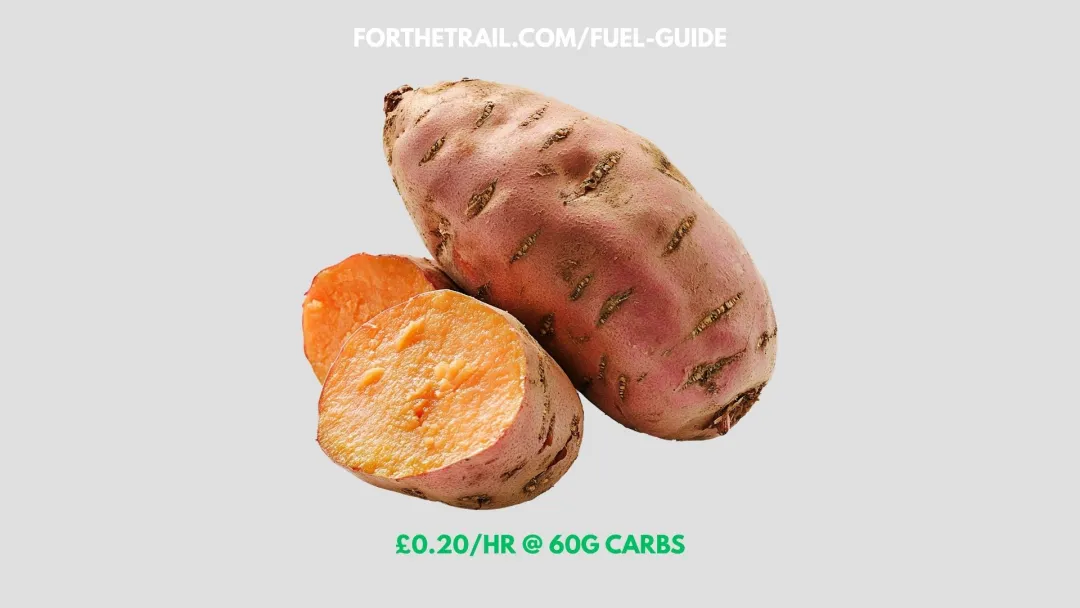
Baked sweet potatoes are a whole food endurance fuel option that can be a great backup and option if you're looking for a savoury and non-sweet fuel. They only have about 20g of carbs per 100g of weight but they are easy to digest, easy on the stomach and very simple to prepare and I personally love the taste of them too.
You can find them pretty much any supermarket, simply bake them in an over for around 10-15 minutes after microwaving them for 5 minutes.
At roughly £1.50-2/kg, they cost just £0.15-0.20 per hour for 60g of carbs, making them one of the cheapest natural fuel sources available.
Once cooked, let them cool and you can carry them portioned into DirtBags, just cut them in to small chunks that fit in to DirtBags and don't forget to sprinkle in a little sea salt too.
If you prefer white potatoes, you can do the same with baby or new potatoes which come in small bitesize servings and when roasted create a perfect thick skin which protects the rest of the potato inside, simply roast in olive oil and sea salt for the same end result and another great option if you have mouth fatigue and looking for a savoury salty real food option.
Buy DirtBags to decant baked sweet potato in to for precise servings and carb control.
Fuelling With Short Grain Rice - Sticky Rice Balls and Rice Pudding
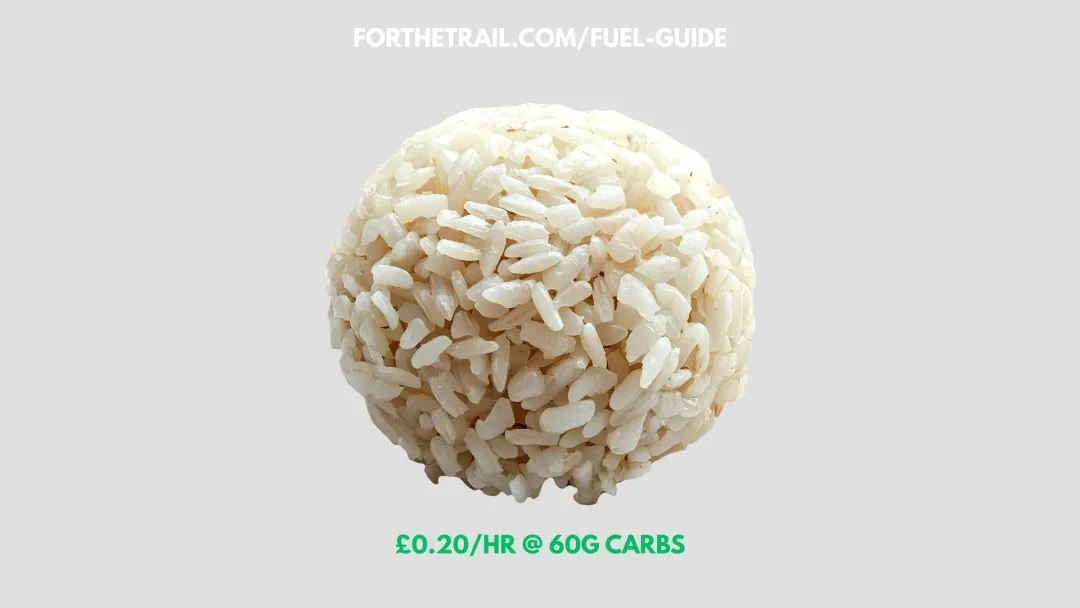
If you're looking at fuelling with white sticky rice, you have a few options that are slightly similar to rice crispy bars but are a savoury alternative to the sweet options we have listed above. There are many ways you can prepare and package rice for endurance fuelling, here we will introduce sticky rice balls and rice pudding.
I have fuelled with packaged rice pudding before as it is easily bought in the UK and can be eaten cold so doesn't need preparing.
The downside to this is that it can be expensive and doesn't taste as good as home-made options which also use much less packaging to create. I've only ever seen white rice used at events of 100 miles and above where people are sleeping and meals are being made in bulk at indoor aid stations.
Sticky Rice Balls
Sticky rice balls are an amazing alternative to gels and chews, offering 30g of carbs per 100g, great for upset stomachs or keeping your stomach in check. They are easily made with short-grain sushi rice which makes it sticky and means they can be made in to small serving balls or pucks and placed in to a Small DirtBag for specific fuel control.
They are superior for endurance because they offer a savory, calorie-dense alternative to gels that doesn't cause flavor fatigue, while also being customisable, adding essential electrolytes like soy sauce or miso or even other flavours that you enjoy.
Rice Pudding
If you are looking for another rice dish that you can have and enjoy for much longer efforts and need some fats adding too, look in to rice pudding, which is also made with short grain rice and you can use coconut milk as the liquid ingredient.
Rice pudding provides another real food alternative to gels and if you make it with coconut milk and maple syrup you get high density carbs for a sustained energy release.
To make it, simply simmer one part pudding rice with three parts coconut milk and a touch of maple syrup or sugar until creamy, then decant the chilled mixture into a Small DirtBag for a mess-free, rice pudding energy gel that's easy on the stomach during long efforts.
This coconut rice pudding is always a winner when people have tried it, delivering 26g of carbs per 100g for just £0.72 per 60g carb serving.
Buy DirtBags to decant sticky rice balls in to for precise servings and carb control.
Home Made Potato Cakes

I've had potato cakes for long days out on the trail pretty much my entire life, we'd have mash in a meal the night before and then use the leftover mash to make home made potato cakes and i'd always look forward to enjoying this savoury real food when out enjoying the great outdoors.
They will provide roughly 25g of carbs per 100g, so not as much as high-end gels, powders or chews because they use simple carbohydrates, however, they are savoury, easy to digest and super super tasty. It's as simple as boiling some potatoes, making some mash and then binding the mash with a flour of your choice, a pinch of salt and then shallow frying them in a flat pancake shape in your frying pan.
Ingredients:
500g white potatoes
50g of flour
1.5 tsp Sea Salt
1 tbsp Olive oil or butter
The Method:
Once your potatoes are boiled and drained, mash them thoroughly with the skins left on and add a little butter or oil
Stir in the flour, sea salt, and olive oil. The mixture should become a firm, dough-like consistency.
Line a small square baking tin with parchment paper. Press the potato "dough" into the tin, leveling it off to about 1cm thick.
Pan-Fry: Slice into rectangles, then pan-fry with a tiny bit of oil until both sides are golden and crispy.
Let them cool completely before putting them away in the fridge, when you need them, just place a few in to a Large DirtBag to take on your adventure
Buy DirtBags to decant home-made potato cakes in to for precise servings and carb control.
Home Made Chewy Rice Puff Crispy Bars
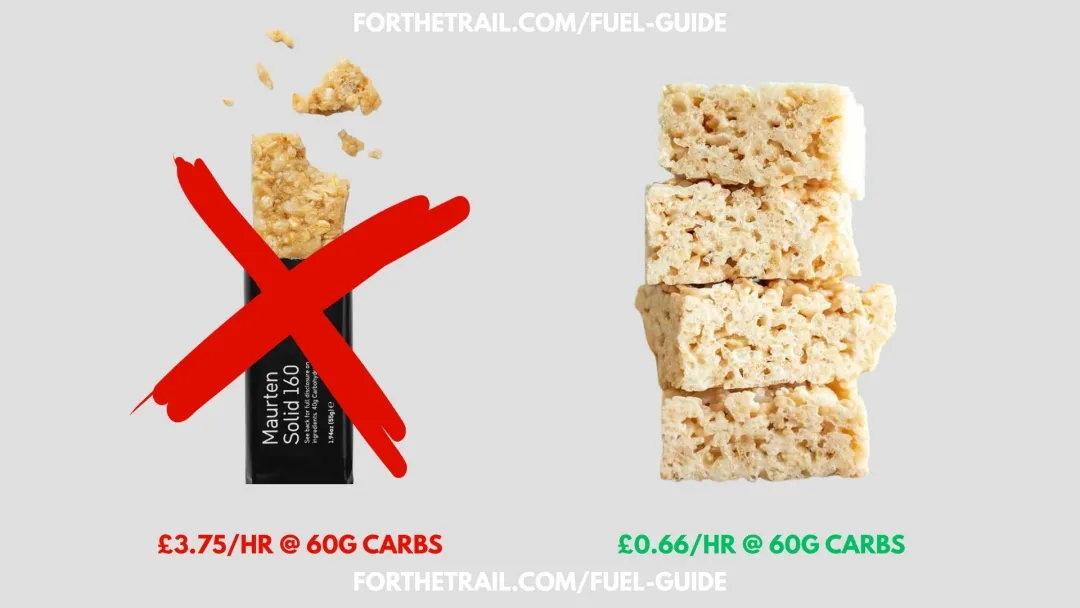
Rice crispy bars are an exceptional energy source and fuel option, delivering a huge 80g of carbohydrates per . They are a light, easily digestible, and airy carbohydrate source that act as an ideal alternative to dense energy bars, providing rapid-absorption fuel that minimises stomach distress while maintaining high power output during long endurance efforts.
To achieve a standard fueling rate of 60g of carbohydrates per hour, you would need to consume 1.5 Maurten Solid bars every 60 minutes, bringing your hourly fueling cost to a staggering £3.75. In contrast, achieving that same 60g target using your DIY crispy bars costs only £0.66 per hour, representing an 82% reduction and huge saving to your wallet, making these a much more financially sustainable offering.
By switching to the homemade version, you are reducing you prrice per 100g of carbs from £6.25 (Maurten) to just £1.10 (DIY), effectively saving £5.15 for every 100g of energy you consume on the bike or trail.
The annual cost for Maurten Solid would be over £975, compared to just £171.60 for the home-made versions, which is an incredible yearly saving of over £800.
Make home-made rice crispy chew bars and get £800+ in yearly savings, you are also preventing approximately 390 non-recyclable foil wrappers from entering the environment.
Ingredients:
150g Marshmallows - Buy @ Amazon
100g Rice Krispies - Buy @ Amazon
20g Coconut Oil - Buy @ Amazon
Sea Salt
Method:
Heat the coconut oil in a large pan on low heat.
Add marshmallows, stirring constantly until they form a smooth, sticky liquid and keep the heat as low as possible, you do not want to burn your marshmallows!
Turn off the heat and pour your marshmallow mixture over your rice puff cereal, folding it in.
Press the mixture into a tray lined with greaseproof paper.
Refrigerate for at least one hour to allow the tray to set before slicing into portable bars.
How To Carry Home Made Rice Puff Energy Bars
You can cut these up in to 3-4cm strips that are 10cm long and fit them in to Small DirtBags. Just make sure to weigh them to get the correct carbs amount so you know how often to take them. Or cut them in to larger sizes and place a few of them in to a Large DirtBag to have as and when you want.
Buy DirtBags to decant your home-made chewy rice crispy bars in to for precise servings and carb control and replicate exactly what you get with Maurten or Stryrkr but for a fraction of the cost.
Flapjack and Oat Bars for Slower Energy
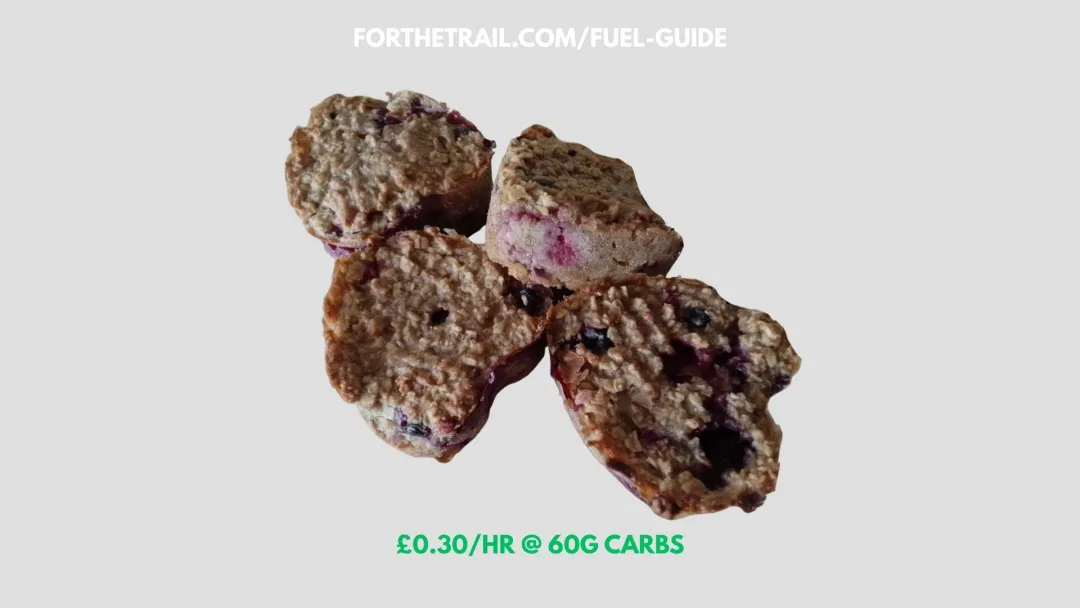
Home made flapjacks are a staple in our home, the above image is just one batch we created the other day. Not only for running with but we make it a handful of times a week to have for breakfast and to snack on throughout the day and to use when we're hiking and for other adventures too.
It's really simple, almost entirely made of wholefood ingredients, has fast and slow energy release as well as a healthy dose of fats, making flapjack perfect for multi day endurance attempts and those looking at slower adventures.
You'll get a decent 30-35g of carbs per 100g for these flapjacks, which is less than the simple sugars listed above, but great for longer and slower adventures where you want slow released energy and some fats too.
For a standard training week where you'd consume 5 bars, your cost drops from £12.50 down to just £1.12 when comparing it to oat based energy bars from nutritional brands. This simple recipe yields roughly 200g of total carbohydrates per batch, delivering fuel at about £1.12 per 100g of carbs, nearly 80% cheaper.
Best of all, by baking in bulk and using a Small or Large DirtBag for carrying, you're cutting out 260 foil-lined and plastic wrappers a year from store bought oat bars, proving that the best trail fuel doesn't come from a lab, but from your own oven.
Recipe
It only uses 5 ingredients and we often rotate the berries for other things like mashed dates, blueberries or other frozen fruits.
- Banana
- Dates
- Oats
- Berries but can be swapped out for other fruits
- Peanut butter
- Coconut milk
Get a large flat dish or silicone tray, we use one with portion sizes that we place our flapjack to create lovely large portions.
In a mixing blow, mash 2 bananas in it. Once this has been mashed, add your handful of dates, lightly mash these too, although having put them in boiling water to soak and soften will help. If you aren't using dates and just using mixed frozen fruits then simply place all the rest of your ingredients in the bowl together.
This would be a couple cups of oats, pour a cup of berries in, add at least four tablespoons of peanut butter and a full tin of coconut milk and simply mix and press all of these ingredients together so that the coconut milk, peanut butter and bananas ares all well mixed in with the oats which starts to absorb the moisture.
If it needs more liquid, we add a splash of plant milk or if its too wet as you used two bananas, just add a few tablespoons of oats.
Flatten the mix and then put in the oven for 20 odd minutes at 180c.
This recipe will last for days in the fridge and tastes great even when it's cold and will also travel really well as single serve portions in a DirtBag so that you know exactly how many carbs, fats and calories you're getting.
Buy DirtBags to decant your home-made flapjacks in to for precise servings and carb control.
Different Fuelling Scenario Examples in Trail, Marathon and Ultra Running (COMING SOON)
As well as learning about what can be bought or made for a fraction of the price and how you can reduce plastic waste, we also go through how they are consumed.
We then look at the scenarios you will use them in trail, ultra marathons and endurance events and adventures, whether you're running, hiking or cycling.
- Training runs of more than 1.5 hours in length, this can be repeated each hour.
- With energy gels, energy powders, energy chews, home-made snacks, whether they were bought in bulk or made at home
- Repeating this for runs of more than 3 hours in length, like trail and mountain half-marathons and road marathons
- With energy gels, energy powders, energy chews, home-made snacks, whether they were bought in bulk or made at home
- Repeating this for runs of 6+ hours, up to 24 hours and beyond, covering 50, 100+ mile events.
- With energy gels, energy powders, energy chews, home-made snacks, whether they were bought in bulk or made at home and then adding to this drop bags of food and potential aid stations
- Repeating this for specific types of events like
- Back yard ultras
- Multi day fastpacking with meals and cold soaking
This section is coming soon and is being drafted whilst you read this. We will develop on this section in the coming weeks and show estimated plastic packaging savings as well as price savings for each scenario with each fuel option and a mixture of them combined to share as many different fuelling scenarios as possible to hopefully inspire you.
Other Fuelling Tips
I've been fortunate to have been in the mountains, fell running, doing ultras and have been hiking my entire life, so have eaten a lot and learned a lot about fuelling and here are some of the fuelling tips i've learned over the years.
The 1:1 Ratio of Glucose and Fructose
If you want to experiment with glucose and fructose ratios and why you often see ratios like 2:1 and 1:0.8 on nutritional brand energy sources, this is their ratio or glucose to fructose that they've used.
For instance, a 2:1 would be 60g of glucose and 30g of fructose, you will not be able to hit more than 90g of carbs per hour at this ratio because you can not consume more than 60g of glucose per hour anyway.
And if you want to hit 120g of carbs per hour you will have to hit the 1:1 ratio or as close to that as possible to get the maximum 60g of glucose and 60g of fructose your gut can absorb.
Training Your Gut
Depending on what fuel you are taking, you need to check what ratios they are, sugar for instance is 1:1 glucose and fructose. Some carb sources are just one of glucose or fructose, whilst others are a mix, like sugar, but have different ratios again.
Just like anything else, you have to be consistent and train your gut, you can't train with 60g per hour and then expect to hit 120g of carbs per hour on race day and be fine. You can adapt your gut and train it just like the rest of your body, if you're doing a 12 week training plan, add nutrition to that at the same time.
I'd recommend being as methodical as you can, aim for 60g of glucose and 10g of fructose for your first few weeks, moving up to 60g of glucose and 20g of fructose after that and so on.
The great thing about this sustainable fuelling guide is that if you are buying in bulk, decanting your own fuel or making it yourself to put in to a soft flask or DirtBag to get specific portion control, you can make the exact ratios you want, especially if you're trying to do something specific like 50g glucose and 15g of fructose, you just can't buy an energy chew, gel or powder with this exact ratio.
You Need To Hydrate
You need to be hydrated when consuming your carbs and fuel, they literally require water to help them absorb. Carb amounts and hydration is different for everybody, it changes again depending on weather, heat, how your body is handling the exertion, etc. You just need to make sure you're getting in enough water whilst you're fuelling and training your gut with more carbs for this to not be an issue.
Three Textures
Always carry at least 3 textures and or flavours of fuel options with you at any one time, especially after 3 hour long races where you will get mouth fatigue and you may also struggle to have a specific fuel option and you have two other backup options on you.
An example of this would be a chew, a fruit and a gel, or another combination would be energy powder, energy chew and real food like sweet potato. This is more important for the really long stuff, from 12 hours+ in my experience as you can get tired of consuming the same thing after 4-6 hours.
Compliment this with no more than 2 more options at aid stations or in your drop bags, never have more than five options total, you want backups and redundancy, but you also don't want too much choice as the longer you go in a race, the harder it gets for your to choose what to have and you should have an easier time getting used to five different fuelling options rather than having more, where one of them you may have never had before in training and it may upset your stomach.
Having Stomach Issues?
If you do have issues with your stomach, look in to ginger and peppermint supplementing or fuel sources with them in. Active Root which we have mentioned above is one brand that actively adds ginger to its fuel options.
Fuel Every 15-20 Minutes
There are a number of reasons for this, one of the main ones is that if you forget to fuel then you'll only miss out on 15g of carbs and then when it comes to your next timer at 30 minutes past the hour, you can catch up on your fuelling plan.
If you fuel every 30 minutes and you miss just one timed session, this means you might not fuel for almost an hour and potentially lose out on 60g+ of carbs and you'll be playing catchup and this could negatively affect your effort and energy you have and further lead to stomach issues.
Never Rely On Just One Fuel Source
Although this fuelling approach is possible, this is not an approach I would take because I prefer to have all my fuelling and hydration separate for redundancy, but it could work really well for you.
What I mean by this is that I don't want to get my energy, my water and electrolytes all from the same source. There is no redundancy to this and it can lead to other issues, one of those is that you may need to fuel and require energy, but you don't need electrolytes or water for that 30-60 minutes, you're then forced to consume water and more electrolytes because it's an all in one nutritional plan.
I keep them completely seperate, hydration (water), fuel (carbs), electrolytes (sodium) I consume from different sources because as soon as you start lumping it all in to one source you end up with potential issues, it can work on shorter training/races or if you get lucky, but i'll explain how easy it is to go awry.
I'll start with sodium, we all sweat differently, if you can, work out how much you roughly sweat with a sweat test, lets just say its 1000mg per hour if its warm.
Now you go to race or train and its cold, you don't sweat anywhere near as much, but you take your hydration/fuel/electrolytes from one source because your carbs are in it, you'll very easily get hypernatremia because you'll be taking in far too much sodium as you are trying to get carbs in.
This is just one example of many where things can go wrong and you've put all your nutrition in to one source.
Next example, carbs and fuel, say you're struggling to get that fuel source in for some reason, your stomach isn't happy with the amount of carbs you're trying or the texture/form its in. If you have electrolytes in with this you'll lose those electrolytes that you needed because you can't fuel, one thing messes up another.
This is why I have multiple fuel sources too, 1=0, 2=1 and so on.
Instead i'll have salt in tablet form or liquid form.
I'll have carbs in a drink or a gel or as a chew/solid but purely for my carbs.
I'll have water separeately with some flavouring.
Caffeine for very end of a race (last hour or two) i'll have in tablet form too.
This way you can dial in your requirements hour by hour as they will change.
We Need Your Support
If we have helped you save money on your fuelling it would mean a lot if you could donate a small amount. Every little helps us create more guides like this which makes trail running, ultra marathons and endurance more accessible and affordable for all.
Thank you for reading, if you haven't yet, please consider buying DirtBags which can help save you money and reduce plastic waste we put in to landfill.
We also have a trail running forum, you can join for free, where we talk about our adventures, fuelling, celebrating nature and much more!
To keep this guide free and independent, some of the links to products are affiliate links. If you buy anything through them, it helps support ForTheTrail.com and allows me to keep building these resources for the trail running community. You can also support us directly at forthetrail.com/support